Global News Network
  • News
  • Continents v
    Africa Europe Asia Oceania North America South America
  • Business
    Finance Stocks Bonds Commodities Real Estate
  • Health
  • Opinion
    Editorials Columns Interviews Guest Pieces
  • Sports
    Football Rugby Basketball Athletics Cricket Motorsport
  • Lifestyle
    Travel Food Home & Garden Health & Wellness Fashion Relationships Arts & Culture Leisure Events Calendar

Featured Articles

Government Dismisses Finance Bill 2026 Misinformation, Raises Alarm Over Rising Child Abductions

By George Mutua

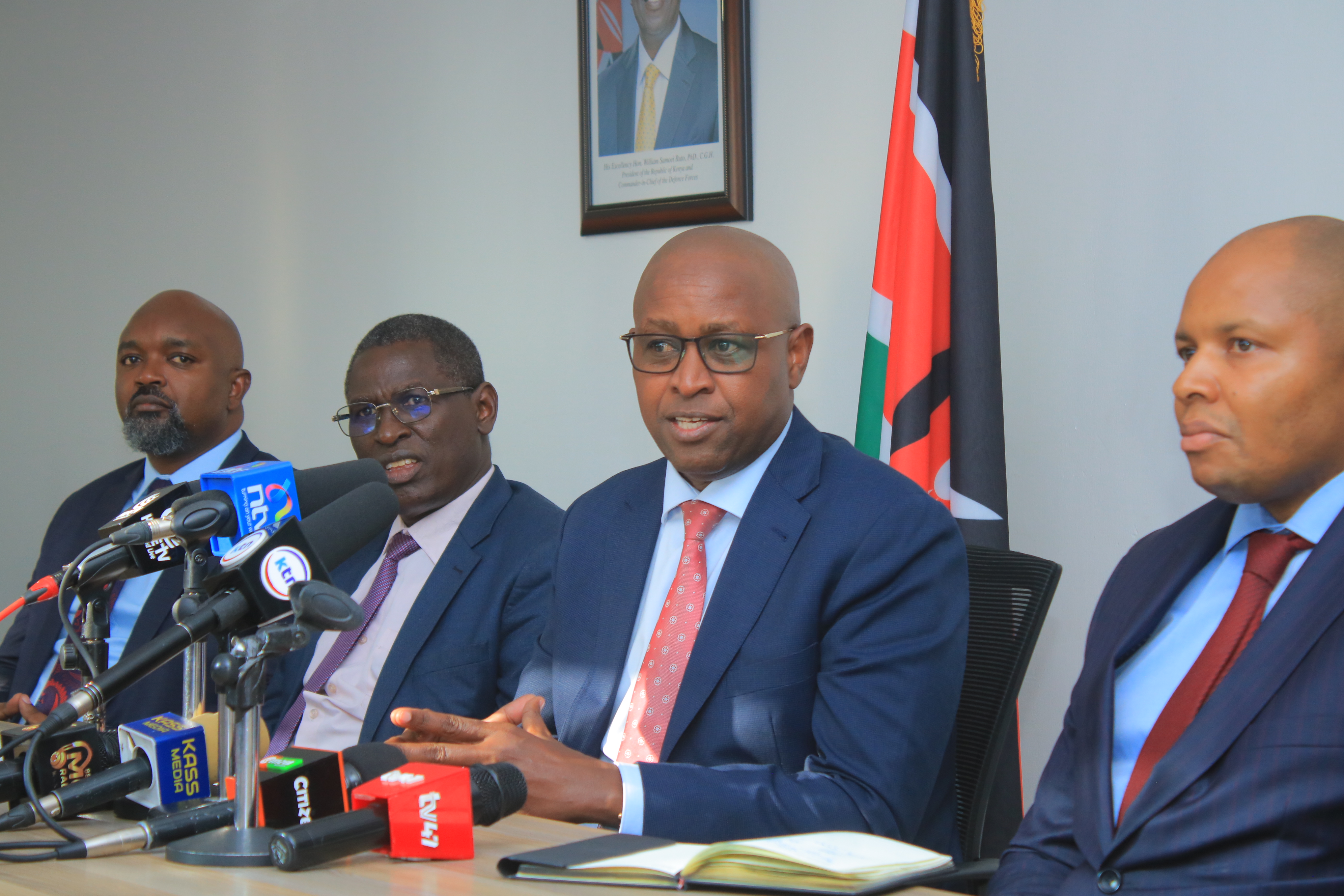
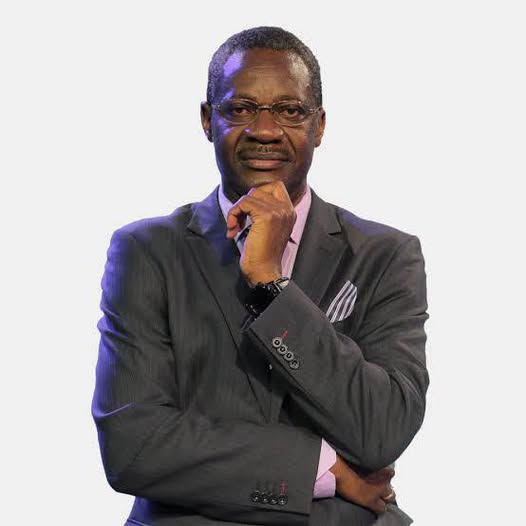
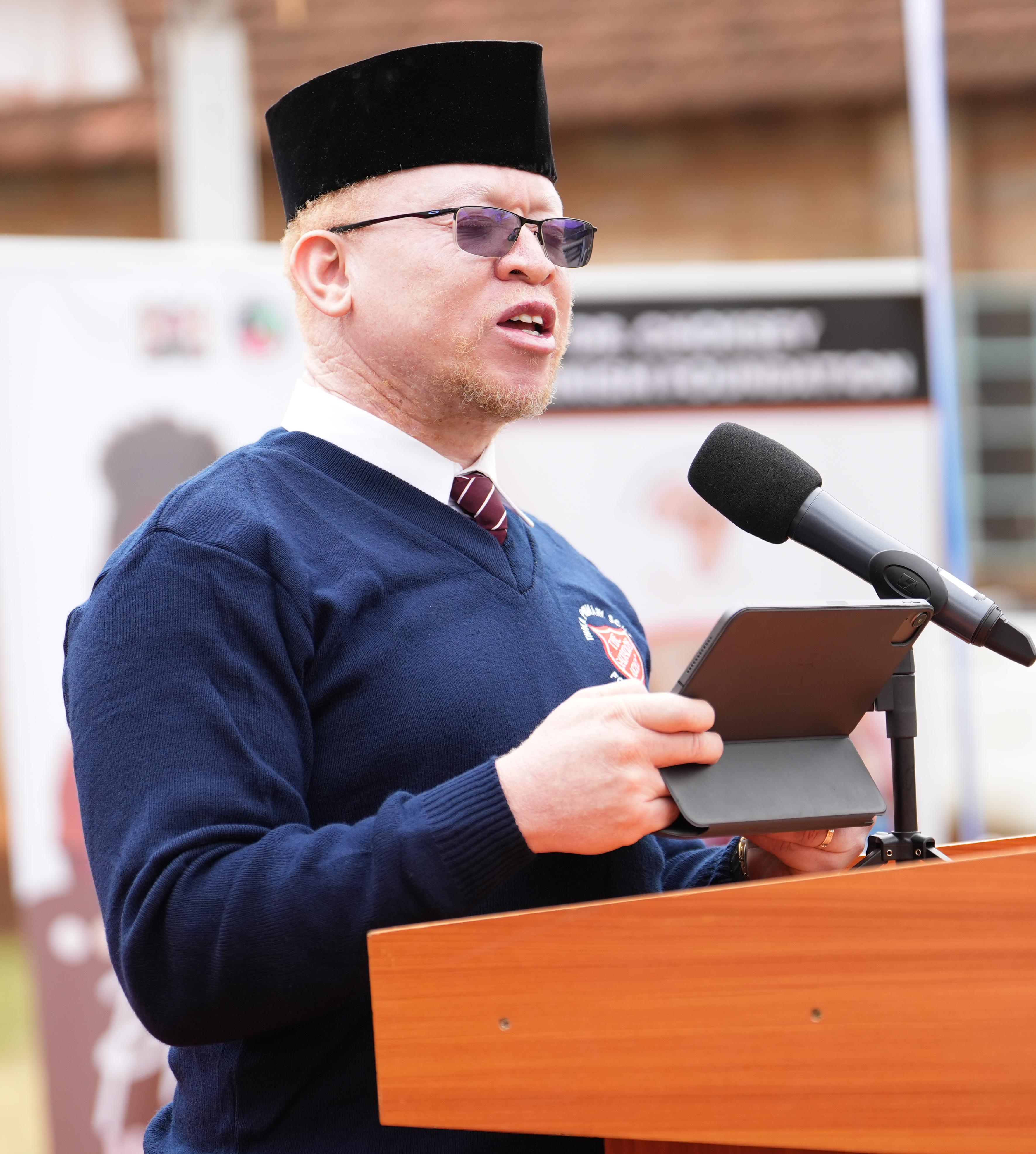
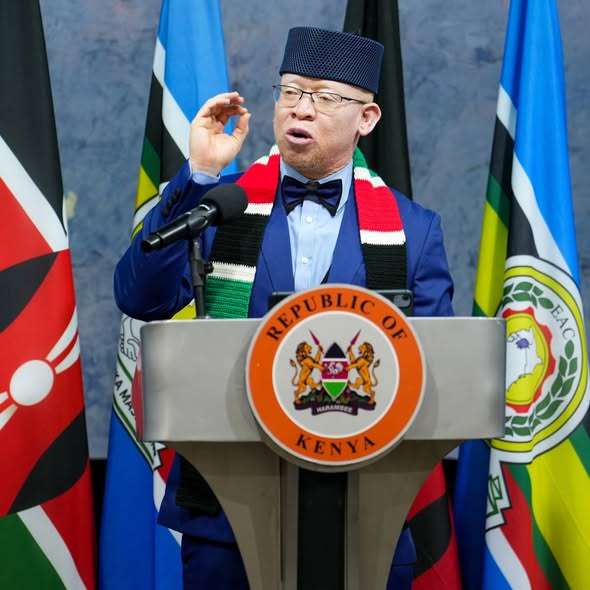
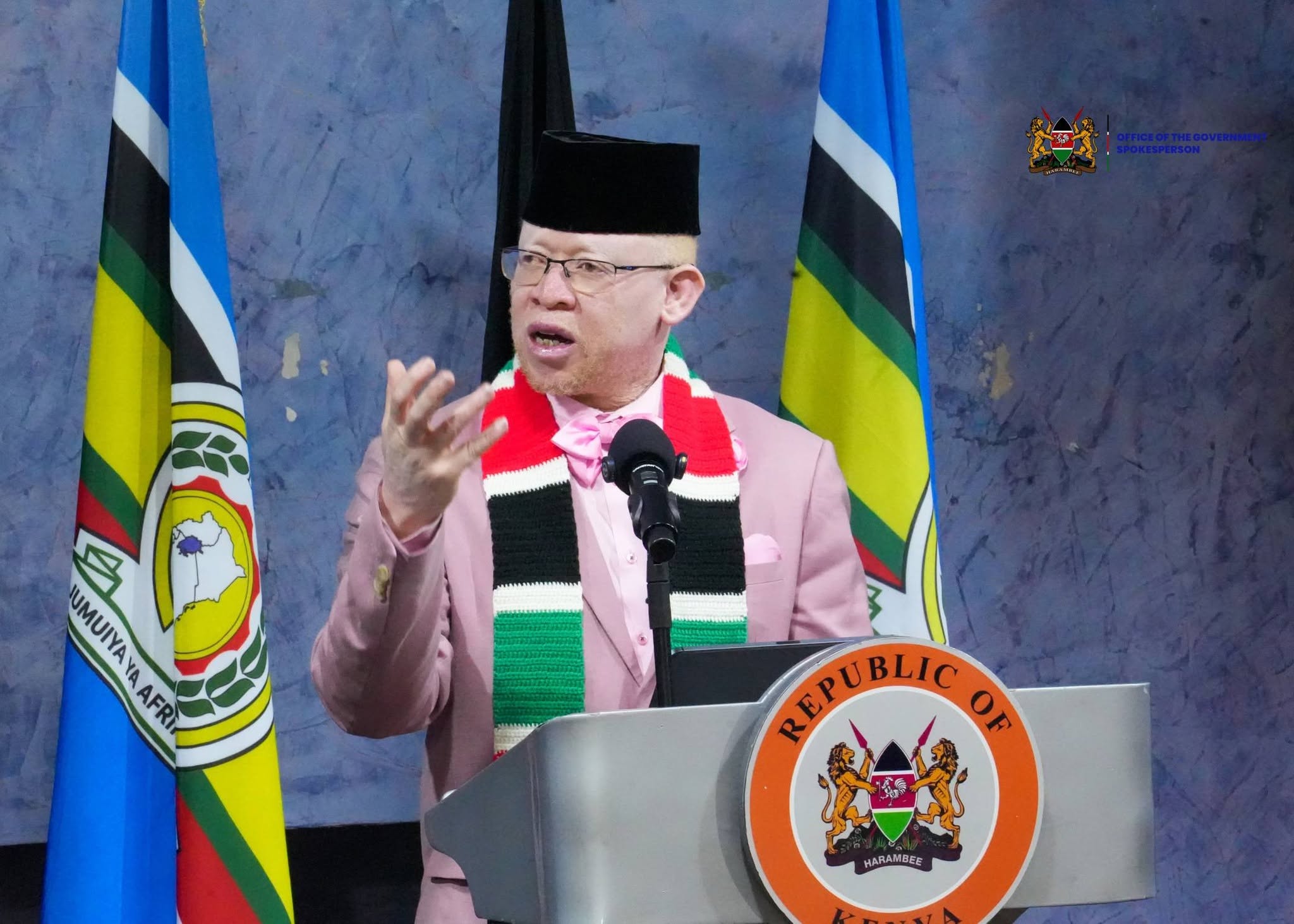
Government Spokesman Isaac Mwaura
Government Spokesman Isaac Mwaura addressing a press briefing at Harambee Annex in Nairobi.
“The Finance Bill contains relief measures aimed at lowering the tax burden while supporting critical sectors. Don't rely on negative energies and misinformation,” said Government Spokesman Isaac Mwaura.

NAIROBI, KENYA – May 27, 2026

The Government has moved to calm growing public anxiety over the Finance Bill 2026, dismissing a wave of claims circulating online as misleading and politically driven misinformation, even as officials raised fresh alarm over a sharp increase in child abductions and trafficking nationwide.

Speaking during a press briefing at Harambee Annex in Nairobi, Government Spokesman Isaac Mwaura addressed both pressing issues, warning that misinformation on tax proposals risks creating unnecessary panic among Kenyans while revealing that thousands of child protection cases have been recorded within just over one year.

Mwaura accused critics of spreading false information about the proposed tax measures, urging citizens to read the Finance Bill for themselves instead of relying on what he termed as "negative energies, misinformation and disinformation" dominating online conversations. Among the claims dismissed by the Government are allegations that the Finance Bill seeks to introduce a motor vehicle circulation tax, impose new taxes on Mitumba clothes, increase taxes on rental income, and introduce fresh taxes on mobile phones and digital transactions.

According to Mwaura, several controversial proposals that had initially been discussed were either dropped or revised before publication of the bill by the National Treasury. He clarified that the proposal to increase residential rental income tax from 7.5 percent to 10 percent was dropped, alongside plans to introduce a simplified tax framework targeting Mitumba traders. The Government Spokesman also denied reports that bread will attract VAT or that the Kenya Revenue Authority will gain unrestricted access to personal mobile money transactions. He maintained that existing privacy and data protection laws remain fully in force and that no Kenyan's personal financial information would be accessed outside the law.

On concerns over smartphones and digital services, Mwaura explained that the proposed excise duty is not a new tax but rather a consolidation of already existing taxes into a simplified framework aimed at streamlining digital taxation without increasing the burden on ordinary citizens. The Government further defended the Finance Bill, saying it contains several relief measures aimed at lowering the tax burden on households while supporting critical sectors of the economy. Among the proposed exemptions are VAT-free dialysis equipment, tax exemptions on agricultural inputs, incentives for local pharmaceutical manufacturing, and VAT exemptions on solar batteries, electric buses, and bioethanol vapor stoves.

Mwaura also highlighted reforms targeting salaried workers, including changes to tax return filing timelines. If passed, the deadline for filing individual tax returns will move from June 30th to April 30th.

Separately, the Government Spokesman raised concern over what he described as a deeply worrying situation involving child safety across the country. According to data from the Child Protection Information Management System, a total of 10,581 child protection cases were recorded between January 2025 and March 2026. The figures include 6,820 cases of child abandonment, 1,952 abductions, 1,636 reports of missing children, and 173 trafficking cases.

Mwaura condemned the abduction, abuse, trafficking, and killing of children, terming the incidents hideous crimes that continue to traumatize families and endanger communities. He said security agencies and child protection officers have already activated multi-agency interventions aimed at rescuing vulnerable children and prosecuting offenders. The interventions include rescue operations, family tracing and reunification programs, alternative family care arrangements, psychosocial support services, and legal action against suspects involved in child-related crimes.

Authorities have also established Children Advisory Committees across counties to strengthen local child protection systems and ensure reported cases are responded to more quickly and effectively. The Government is now calling on parents and guardians to heighten vigilance, particularly during school commuting hours, which officials say have become increasingly risky for children. Mwaura warned that children travelling to and from school remain among the most vulnerable targets for abductors and traffickers, advising parents to personally pick up their children where possible or ensure they are accompanied by trusted adults.

The Government also cautioned parents against leaving children in the care of strangers and urged families to educate children on personal safety, including avoiding lifts, sweets, gifts, or conversations from unknown individuals. Schools have equally been urged to tighten transport and handover procedures. The public has been urged to report cases of missing children, trafficking, violence, neglect, abuse, or online exploitation through the national child helpline 116 or WhatsApp number 0722 116116.

Kenya Gears Up to Make History as Host of UFAK Region East Karate Championships

By George Mutua

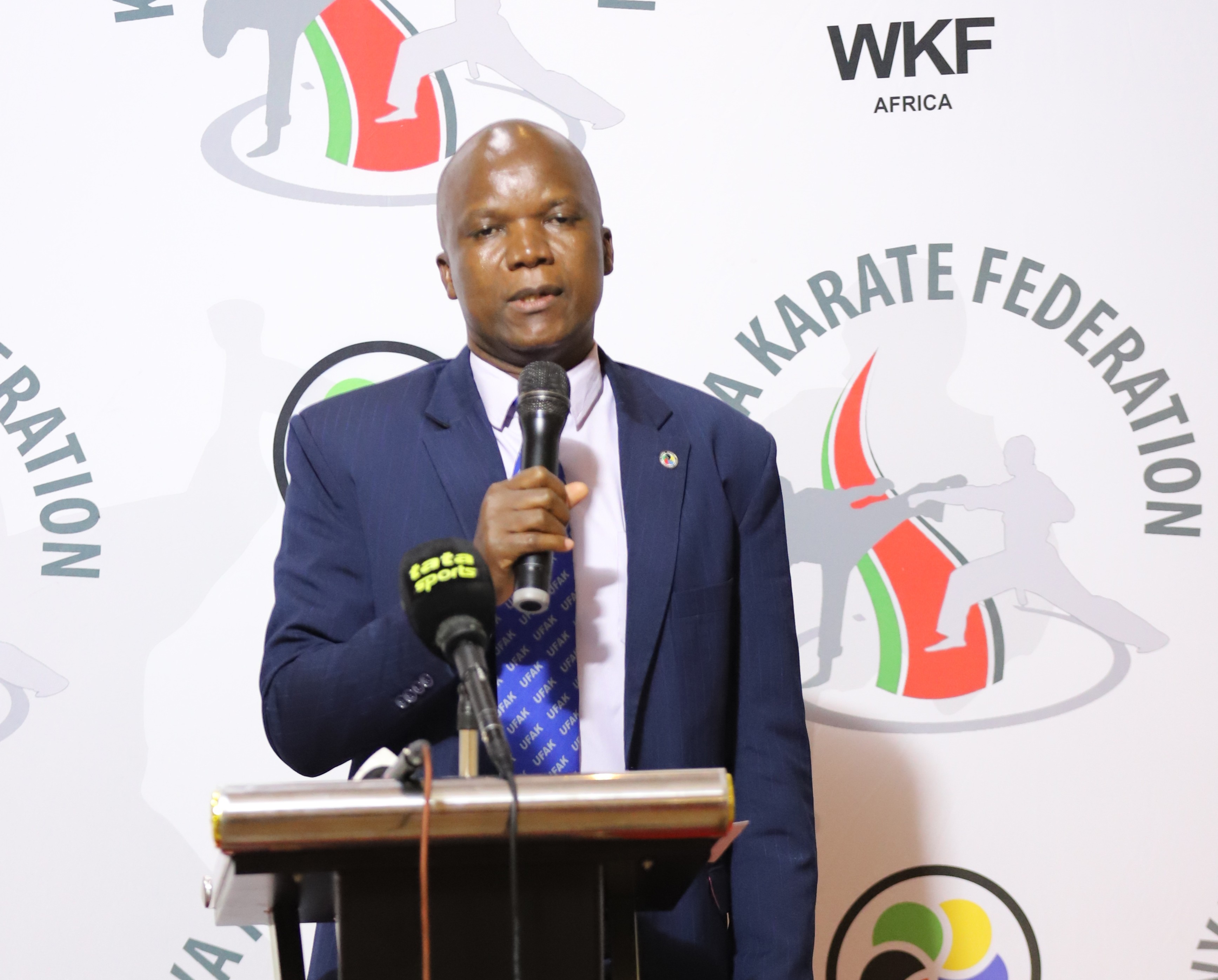
Kenya Karate Federation President Eng. Richard Binga
Kenya Karate Federation President Eng. Richard Binga speaking during the launch of the 2026 UFAK Region East Africa Karate Championships.
“I am happy to welcome you to this session where we are preparing to host the UFAK Region East Karate Championships as the host. This will bring together 14 nations including the Baltic and Niger,” said KKF President Eng. Richard Binga.

NAIROBI, KENYA May 22, 2026

NAIROBI, Kenya With just six days remaining until the opening ceremony, the Kenya Karate Federation (KKF) has officially announced the country’s final preparations for the UFAK Region East Karate Championships, a landmark event expected to draw 14 nations to Nairobi. The championships will be held at Nyayo Stadium.

Speaking at a press briefing in the capital, KKF President Eng. Richard Binga expressed his enthusiasm as Kenya steps onto the regional stage as the host. The championship is scheduled to take place from the 28th to the 31st of this month.

"I am happy to welcome you to this session where we are preparing to host the UFAK Region East Karate Championships as the host. This will bring together 14 nations including the Baltic and Niger. So far, 11 countries are already around to participate and register. We are just working on the finalization."

Kenya will field a formidable squad of 50 athletes who will compete across 30 divisions, including juniors, cadets, and seniors. The final team selection was completed last Saturday, and internal competitive sparring has already commenced.

Eng. Binga noted that Kenya arrives at this home championship with impressive momentum. "We participated in the last competition in Ethiopia. We had a good performance in Cameroon with 10 gold medals. We did it at the Olympics," he said, adding that the federation is also expecting the leadership of the African delegation.

"We are fortunate to have the President of Africa, and we thank him for allowing us to host." Beyond the competition itself, a representative will conduct training for local officials, diplomats, and coaches to update them on new rules, technology adoption, and efficiency, aiming to raise sports standards across the region.

The President highlighted the broader significance of the event. "This is very significant in terms of the history of the country and the region. Sports is an important component. We invite all stakeholders, parents, enthusiasts, and sports stakeholders to this event. We intend to educate through the past four days of our activities, both cultural, political, and spiritual."

He emphasized karate’s inclusive nature, noting the presence of parathletes. "Karate is for everyone. There are so many delegates that you can get from Karate, it can be for education, it can be for business. As long as you are breathing, you can practice."

Echoing the President’s optimism, KKF Secretary General James Gikonyo provided a deeper look into Kenya’s technical preparations and long-term strategy, referencing the federation's focus on the upcoming Regionalist Championship cycle.

He recalled Kenya’s near-defeat of host nation Ethiopia in the last edition, where the team secured 10 gold, 9 silver, and 1 bronze medal. "Our team of around 13 players participated. We have four cards and many categories."

Gikonyo detailed the championship structure, which includes Cadets (14-15 years), Juniors (16-17 years), and Seniors, with individual and team matches. Across all divisions, he noted there will be 63 categories for spectators to enjoy, including Team Kata and Team Unity events.

Kenya’s recent international record underscores its rise. "We had a championship with Roma, where we came top with 2 gold, 3 silver, and 2 bronze medals. Then we followed up with the World Open Championship in South Africa, where we won 9 out of 26 participating countries. That was the first time Kenya had participated in the World Championship, we got 3 silver and 10 bronze medals."

The Secretary General stressed that the federation is focused on building the future, with special attention on the junior and senior junior teams. He pointed to last year’s African Youth Games in Abuja, where Kenya’s junior team won the Team Kata gold, a first for the nation.

Looking ahead, Gikonyo confirmed that Kenya is aiming to send a team to the 4th Junior Junior Cadet Championship on September 17th in Algiers, as well as the World Youth Games in Algeria. A key challenge remains qualification for the three-legged event for the world’s top 32, which requires navigating three protocols in Algeria. Kenya has selected 15 members to attempt this feat.

Kenya Karate players Jackson Sila, Januaris Wambua, and Alla Gitongo
Kenya Karate players Jackson Sila, Januaris Wambua, and Alla Gitongo giving a demonstration during the launch of the UFAK Region East Africa Karate Championships.

"Our selection policy is elaborate. We start from the K-1 team, then the Wakanda Open, our National K-1 Championship, and a Country Championship. We have 91 players for the World Series. The last election was last Saturday, and things have started to replenish. We have a coaching team, and we look forward to great results."

With the clock ticking down to the UFAK Region East Karate Championships, both officials issued a unified call to the nation.

"We only have six days left," said Eng. Binga. "To the committees that are preparing, we just ask you to continue with the commitment that we started with. We look forward to successful and colourful events."

Gikonyo concluded, "Just to add a word to that, for this event, we are very happy to have this possibility."

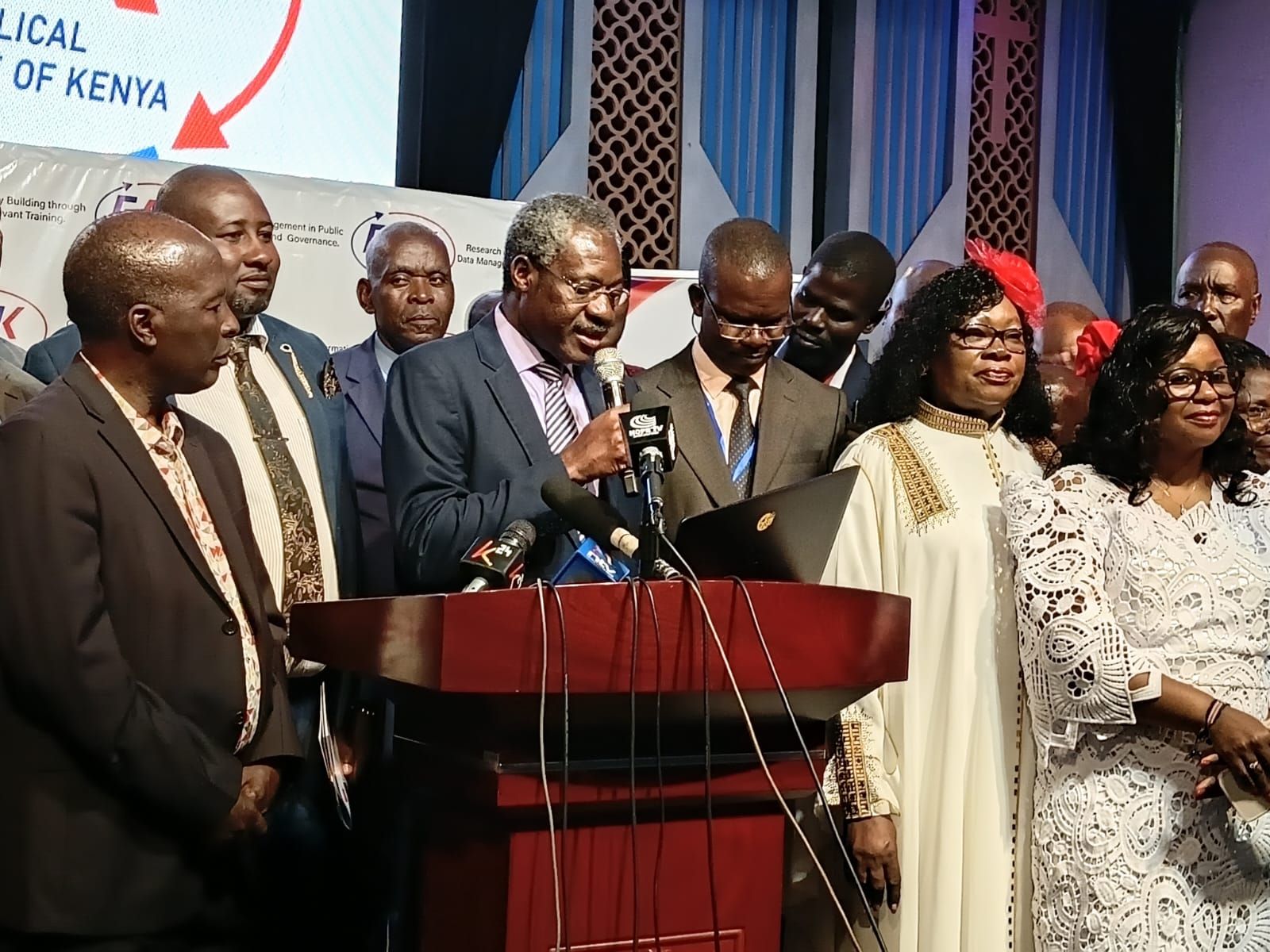
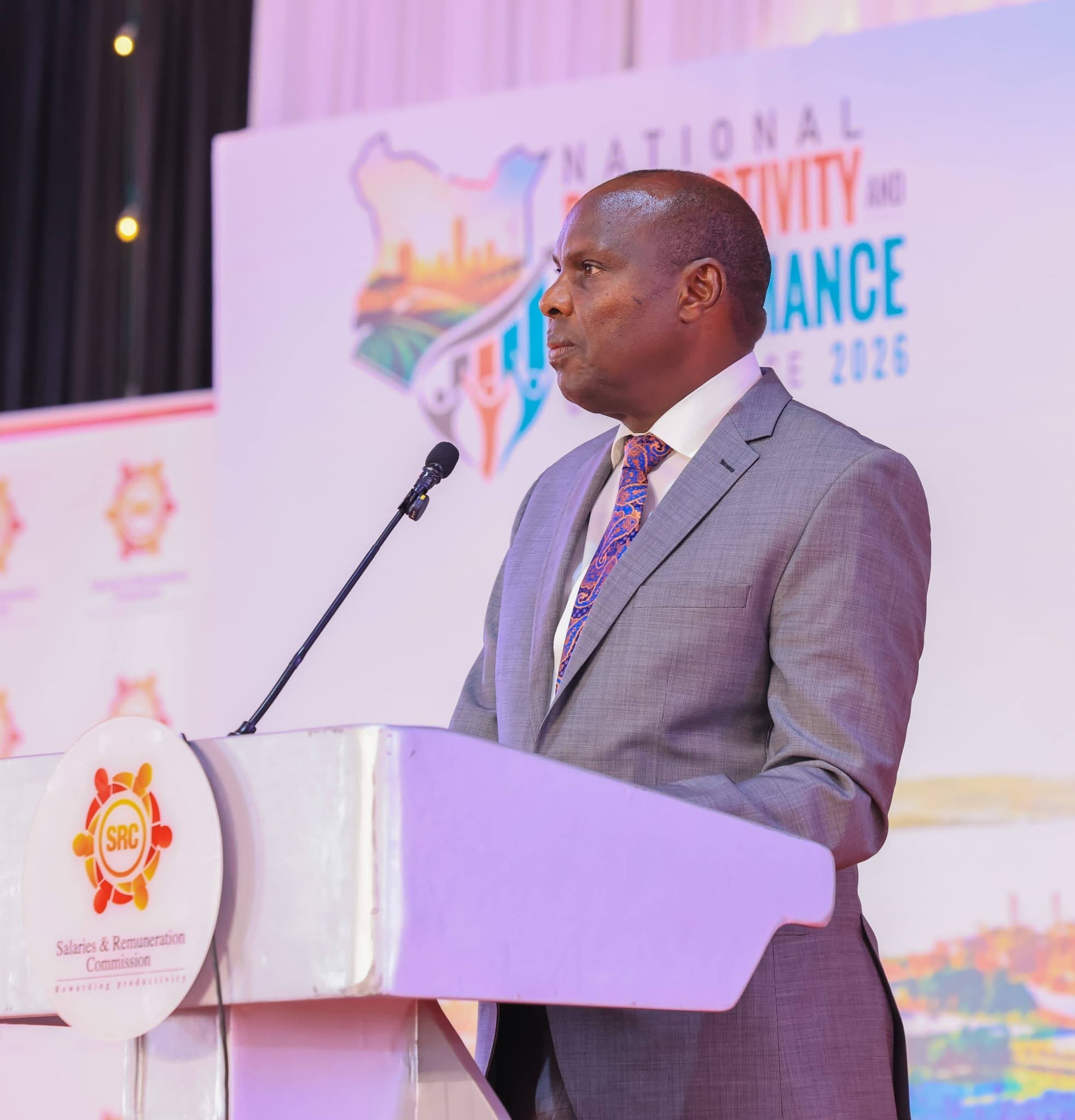
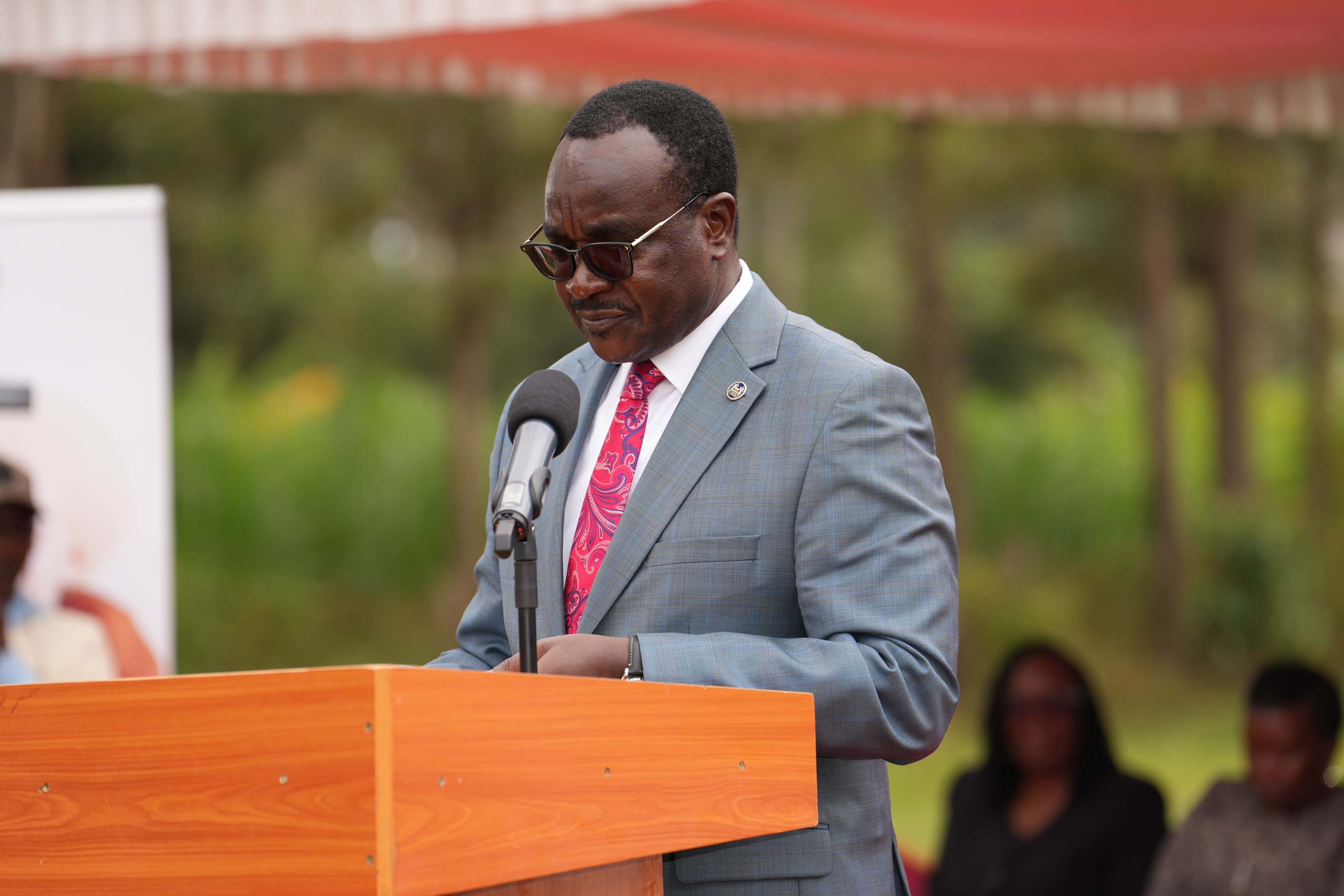
Kenyan Scholar Calls for Age Limit Reform and Competence Based Inclusion to Unlock 50 Percent Research Target by 2050

By George Mutua

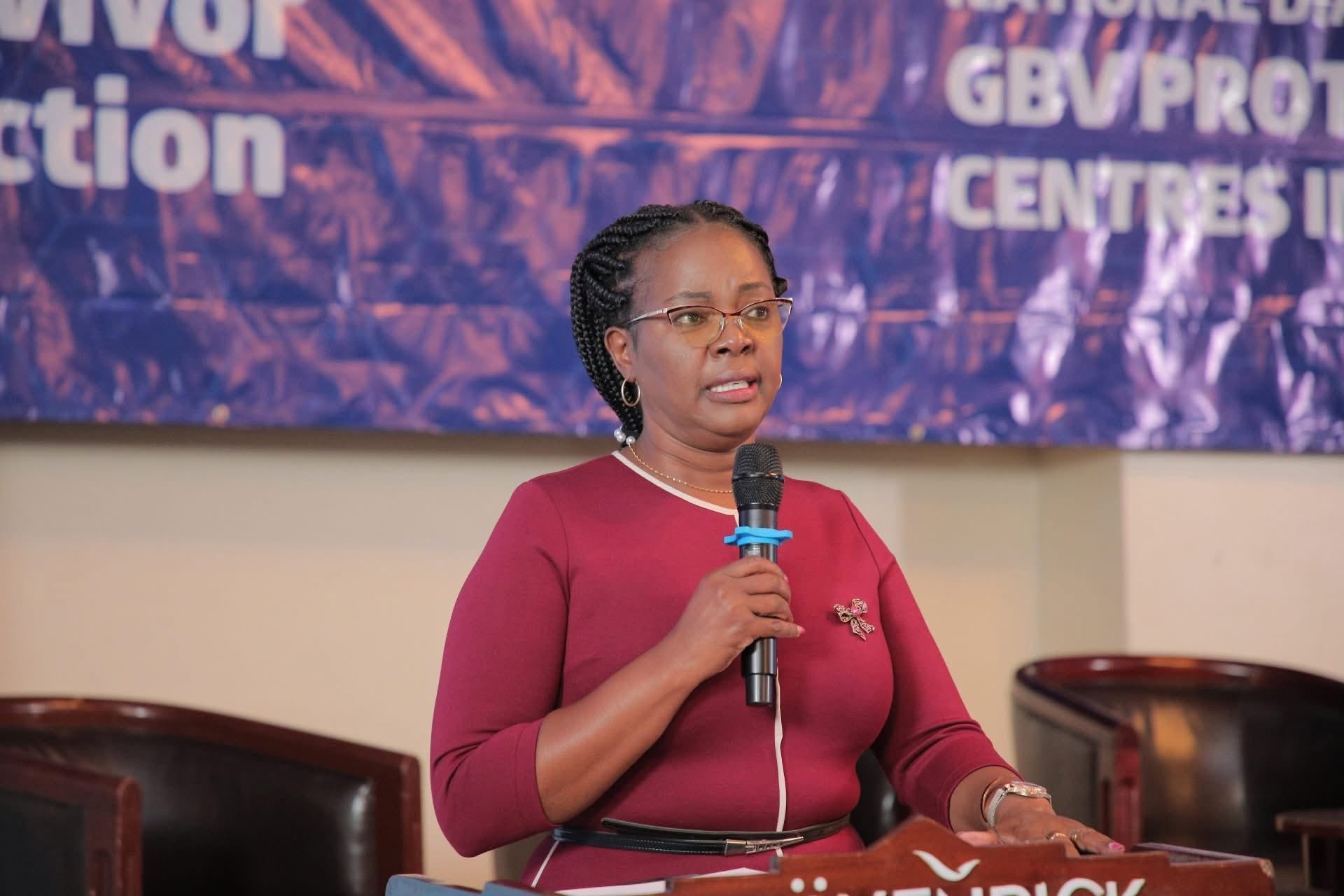
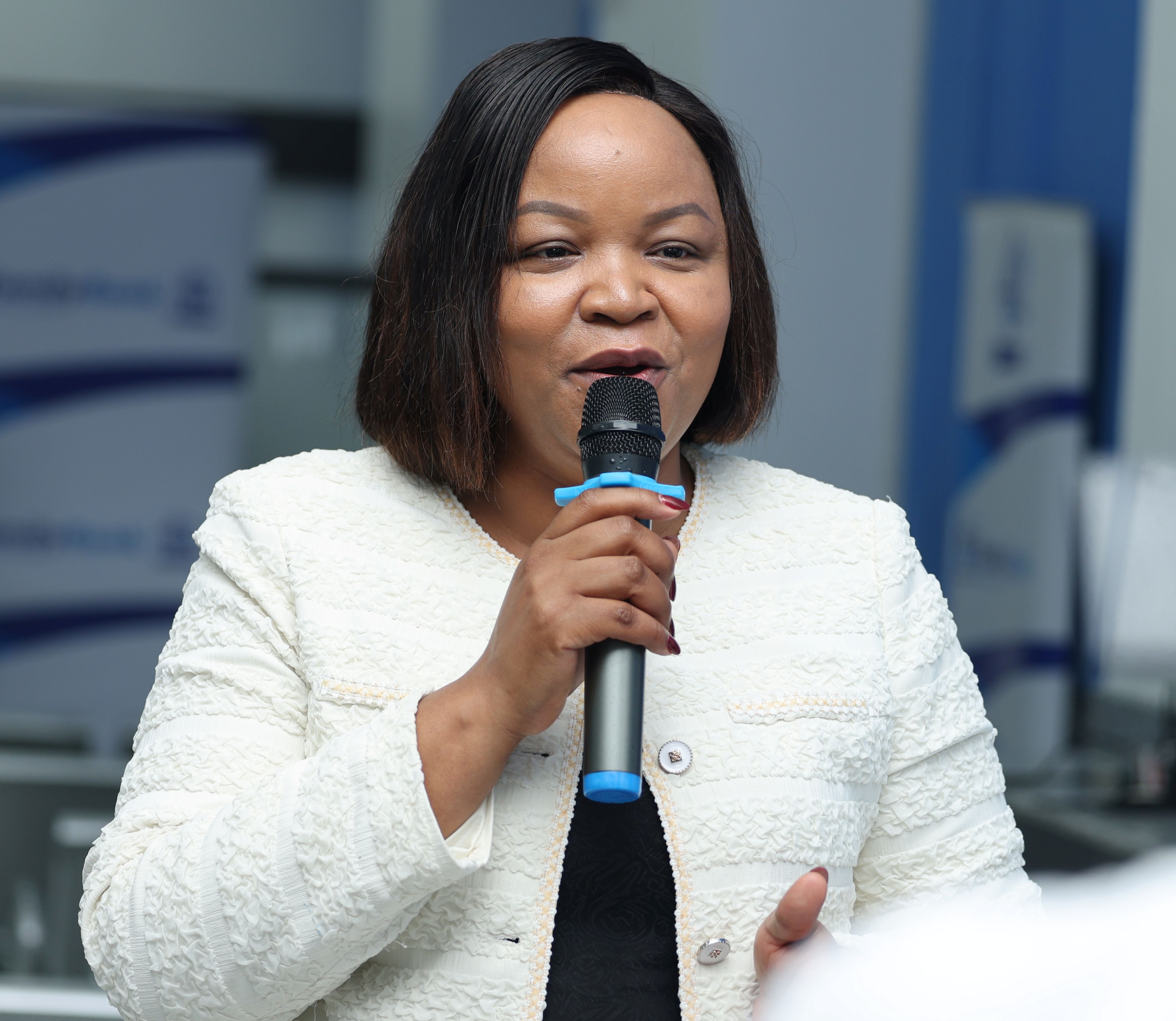
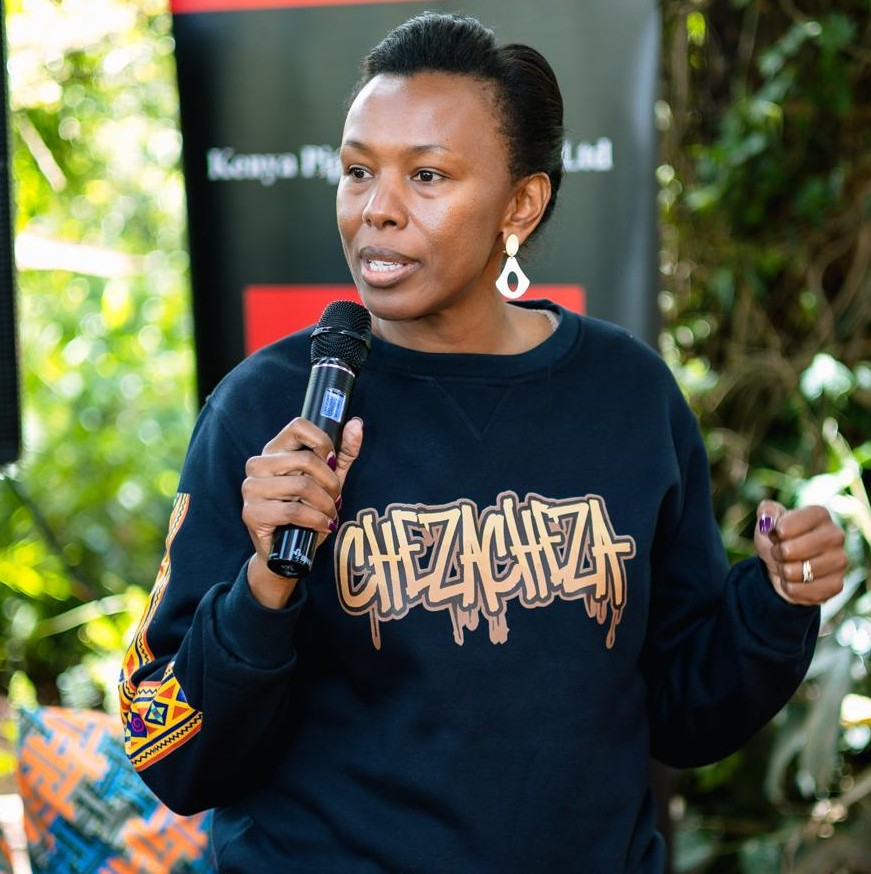
Dr. Purity Ngina, PhD, MBS, CEO of National Gender and Equality Commission
Dr. Purity Ngina, CEO of the National Gender and Equality Commission (NGEC), addressing STRI Week 2026.
“The first thing is for us to be more intentional to include, so that we have both voices for men and women, persons with disabilities, and minorities and marginalized groups,” said Dr. Purity Ngina.

NAIROBI, KENYA – May 21, 2026

NAIROBI, KENYA – A top Kenyan gender equality advocate has issued a powerful challenge to research funders and universities, urging them to dismantle age barriers and embrace a competence-first approach if Africa is to produce half of the world’s research by 2050.

Speaking during The Science, Technology, Research, and Innovation for Society (STRI) Week 2026 (STRI4SOCIETY WEEK 2026), Dr. Purity Ngina, PhD, MBS, Chief Executive Officer of the National Gender and Equality Commission (NGEC), laid bare the structural biases that systematically exclude women and caregivers from academic and research careers.

“If you look at many grants, probably not from government, they will always have an age limit,” she said. “For a Master’s, you must be below 30 years or something; for a PhD, 37 years. Most of us are left behind because we spend some of that time bringing forth a generation.”

Drawing from her own experience, the CEO recounted how biological realities clash with rigid scholarship timelines. “When I was doing my Master’s, I was given a scholarship by a university and was in the field collecting data. It is exactly not possible unless you leave your children behind. Yet science shows that the most important things are the first 1,000 days for a child’s brain development. When I was doing my PhD, I was given another scholarship for three years. You have to always ask yourself, so what do I do? Do I start a family? Do I go? And then you realize that some of us are left behind on that front because you took a different trajectory.”

She noted that even when policies promote gender equality, they fail to accommodate motherhood. “If policies were gender friendly, I would have been given even some leave to go have children, or get research support, perhaps a researcher who will walk with me on the journey so that when I am not able to go to the field to collect data, I can send them.”

Citing a recent NGEC study, Dr. Ngina revealed that 50 percent of all research in Kenya is conducted within universities. “We appreciate that quality and good research is happening in the university,” she said. However, she questioned whether that research transitions from the shade into impact, and whether young female researchers can compete competitively with their male peers.

Rejecting the perception that qualified women are scarce, she pointed to role models such as Professor Gila. “There are so many qualified women,” she said. “We must push for a narrative of competence for women. When we talk about quotas, people assume you are not qualified, and yet you are qualified. The only issue is because of the competitive nature and the way our patriarchal system has worked, you find women having been left behind for many years.”

An analysis of university council members conducted by NGEC revealed a stark lack of female decision makers. “Even universities where research is happening, women’s voices are not there when allocating resources. Are you saying that you do not have doctors? I am one of them. I graduated with a doctorate. So we must also push a narrative of competence of women, so that it is not a narrative of give us Article 27A over that, or persons with disabilities. We have so many competent people with disabilities in this country.”

Looking ahead, she rallied stakeholders behind the continental goal of 50 by 2050, ensuring that 50 percent of global research output originates from Africa. “For that to happen, each country, Kenya and others, must come together and invest a lot of money in research. Because without good research, you make bad decisions.”

She concluded with a call for intentionality. “The first thing is for us to be more intentional to include, so that we have both voices for men and women, persons with disabilities, and minorities and marginalized groups. Right now we are pushing for the narrative of 50 by 2050, that Africa must produce research. 50 percent of research must come from Africa by 2050. For that to happen, each of these countries that we are in, Kenya and others, must come together and invest a lot of money in research. Because without good research, then you make bad decisions.”

NCBA Group Posts KES 6.0 Billion Profit After Tax in Q1 2026, Signaling Strong Start to New Strategic Era

By Staff Reporter

NCBA Group Q1 2026 Results
NCBA Group Managing Director John Gachora announces Q1 2026 financial results.
“As we present our financial results for the first quarter of 2026, I am pleased to report that the Group has delivered a strong start to our new strategy anchored on four pillars: Fortifying the Core, Scaling High-Growth Segments, Unlocking New Growth Frontiers, and Powered by a Future Ready Ubuntu purpose-driven culture,” said NCBA Group Managing Director John Gachora.

NAIROBI, Kenya - May 20, 2026 | Finance

NAIROBI, Kenya, May 20, 2026 – NCBA Group PLC has delivered a robust performance in the first quarter of 2026, posting a profit after tax of KES 6.0 billion, representing a 9.0 percent increase from the KES 5.5 billion recorded in the same period last year, the lender announced today.

The strong earnings come as the Group rolls out a new four-pillar growth strategy, with operating income surging 15 percent year-on-year to KES 20.0 billion. Profit before tax stood at KES 7.4 billion, also up 9.0 percent from 2025.

“The Group delivered strong topline momentum, with operating income increasing by 15 percent year-on-year, reflecting sustained business growth, improved revenue diversification, and continued resilience across core operating segments.”

Operating expenses rose 9.0 percent to KES 9.7 billion, while provisions for credit losses increased sharply by 56 percent to KES 2.5 billion. Gachora attributed the rise to a “prudent approach to credit risk assessment given the heightened volatile operating environment.”

Despite the increased provisions, the Group’s capital position remained robust, with a total capital adequacy ratio of 21.8 percent – well above the regulatory minimum of 14.5 percent. Return on average equity (ROAE) held steady at 18.4 percent.

Customer deposits closed at KES 544 billion, a 10.0 percent increase, while total assets grew 13.0 percent to KES 741 billion.

NCBA Bank Kenya remained the Group’s primary profit driver, with profit before tax jumping 20 percent year-on-year to KES 6.5 billion. Regional operations in Uganda, Tanzania, and Rwanda delivered a combined PBT of KES 707 million.

Non-banking subsidiaries – NCBA Investment Bank, NCBA Insurance, Leasing, and BancAssurance – collectively reported KES 641 million in PBT. Assets Under Management at NCBA Investment Bank grew to KES 101.5 billion, with wealth customers crossing the 60,000 mark. The insurance arm saw Gross Written Premiums rise to KES 5.0 billion.

NCBA reinforced its position as the region’s undisputed digital lender, with digital loans disbursed reaching KES 391 billion in Q1 2026 – a 27 percent increase year-on-year. The Group reported that 98 percent of all transactions are now digital.

The newly launched digitally accessible SME lending product, NCBA BOOSTA (valued at KES 35 million), is expected to accelerate the KES 8.3 billion in MSME lending reported for the quarter.

In asset finance, where NCBA commands a 32 percent market share, the digital vehicle trading platform CarDuka has onboarded close to 7 million users.

The Group also improved service uptime to 99.74 percent, supported by new technology infrastructure investments in cybersecurity, AI-powered onboarding, credit and claims processing, and CRM-driven customer experience. The Digital Channels Net Promoter Score rose to 62.

NCBA deepened its community development commitments in Q1 2026, positively impacting over 200,000 livelihoods. Nearly 200 students received scholarships, and more than 200,000 trees were planted in partnership with the Kenya Forest Service and Uganda’s National Forest Association.

On the green financing front, the Group acted as lead arranger for the KMRC green bond raising KES 3 billion, and served as Trustee and Receiving Bank for the KES 4.8 billion TRIFIC Green REIT. Green financing disbursements totaled KES 190 million.

Inclusive sports sponsorships benefited over 1,900 golfers and 800 cyclists, while creative economy activations empowered more than 600 talented youth.

“Our capital position remained robust… reflecting our continued long-term commitment to delivering value to our shareholders,” Gachora added.

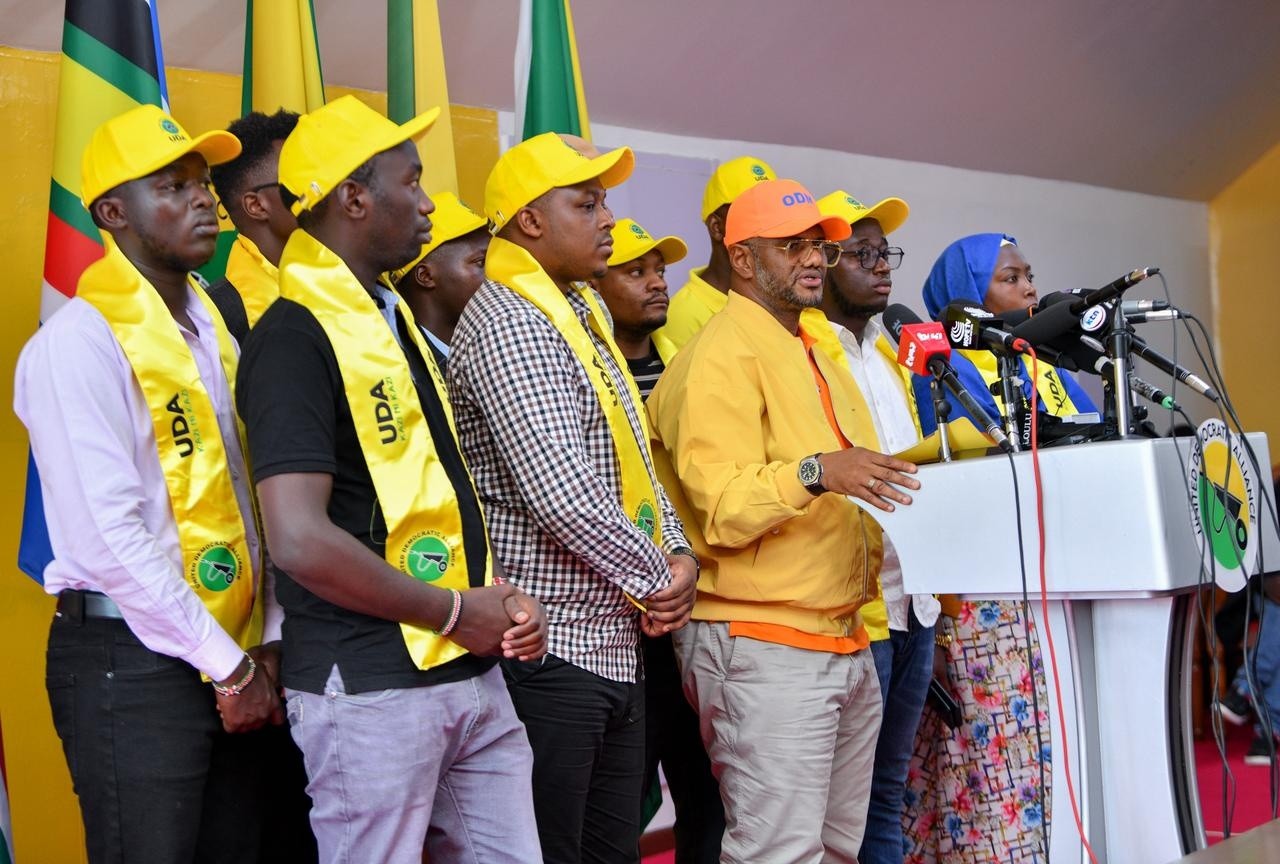
UDA Condemns Horrific Killing of Woman Over Ruto Tattoo, Demands Justice

By George Mutua

Ms. Rachael Wandeto Muthoni
Ms. Rachael Wandeto Muthoni, who was killed in Mwiki over a tattoo associated with support for President William Ruto.
“This savage and cowardly act championed by the opposition is a chilling reminder of the dangerous levels of political intolerance, hatred and extremism being cultivated in parts of our society.”

NAIROBI, Kenya – May 17, 2026

NAIROBI, Kenya – The United Democratic Alliance (UDA) has issued a strongly worded statement condemning the brutal murder of Ms. Rachael Wandeto Muthoni, who was killed in what appears to be a politically motivated attack in Mwiki, Kasarani Sub-County, on the evening of May 16, 2026.

According to party officials, the 26-year-old was set upon by unknown assailants who allegedly doused her with petrol and set her ablaze. The motive, reports indicate, was a tattoo on her body associated with support for President William Ruto.

In an official press release, the UDA described the killing as "savage and cowardly," holding the opposition directly responsible for cultivating an environment of political hatred and extremism.

"This savage and cowardly act championed by the opposition is a chilling reminder of the dangerous levels of political intolerance, hatred and extremism being cultivated in parts of our society," the statement read. "No Kenyan should ever be hunted, attacked or murdered for exercising constitutional rights and political freedoms."

The ruling party went further, accusing opposition leaders of fueling violence through reckless rhetoric, including labeling fellow citizens "traitors" for holding divergent political views.

"Any leader who deliberately sows seeds of hatred, division and political intolerance among citizens inevitably breeds criminality, violence and bloodshed," the UDA warned, noting that such rhetoric is "increasingly threatening lives, eroding national unity and undermining peaceful coexistence."

The party has demanded swift, transparent, and thorough investigations into the heinous crime, calling on security agencies to ensure all perpetrators and accomplices are apprehended and brought to justice under the full force of the law.

"Kenya is a democratic nation governed by the rule of law, not mob hatred, political fanaticism or violence," the statement emphasized. "Such primitive and inhuman acts have absolutely no place in our society."

The UDA concluded its statement with a somber tribute: "May the Soul of Rachel Muthoni Rest in Eternal Peace."

Police have yet to release an official statement on arrests, though sources indicate that detectives from the Directorate of Criminal Investigations (DCI) have been deployed to Mwiki as part of the ongoing probe.

“The Pain is Real, But So is the Response” – Youth Leader Hon. Dennis Kagasi Addresses Fuel Price Crisis in Nkaimurunya Ward

By George Mutua

Hon. Dennis Kagasi addressing residents
Hon. Dennis Kagasi, Nkaimurunya Ward Youth Leader, acknowledges the fuel crisis impact during a public forum in Kajiado North.
“I see the pain, feel it, and I am not here to tell anyone it is not real. Acknowledging this reality is not an excuse but rather the starting point for an honest response.”

NKAIMURUNYA WARD, KAJIADO NORTH – May 18, 2026

In a candid and unscripted address delivered today before a gathering of residents, transport operators, and young entrepreneurs, the Ruling Government Youth Leader for Nkaimurunya Ward, Hon. Dennis Kagasi, acknowledged the severe impact of rising fuel prices on ordinary citizens while outlining a multi-pronged government response.

Speaking at a public forum in the heart of the ward, Hon. Kagasi rejected superficial reassurances, instead offering a frank assessment of the crisis. He stated that he knows what rising fuel prices mean in real terms, including higher fares to get to work and school, higher costs for riders, small traders, and farmers trying to get produce to market, as well as tighter budgets for families already stretching every shilling. He emphasized that he sees the pain, feels it, and is not there to tell anyone it is not real.

Hon. Kagasi attributed the primary cause of the price surge to global market forces, including supply disruptions, demand cycles, and geopolitical events affecting crude oil prices, compounded by currency pressures on importing nations. He stressed that acknowledging this reality is not an excuse but rather the starting point for an honest response.

The Youth Leader then detailed three ongoing government actions designed to cushion vulnerable populations. First, the government is protecting the vulnerable by maintaining targeted relief measures for public transport, agriculture, and low-income households. Second, the government is increasing transparency and responsiveness measures, as the fuel pricing mechanism is now under monthly review, ensuring that adjustments reach citizens faster. Additionally, the government is publishing the full breakdown of the pump price.

Third, the government is addressing the structure behind the problem by building a system less exposed to external shocks, which includes improving public transport efficiency, supporting youth led transport cooperatives to scale, and accelerating viable energy diversification by investing in sound alternatives.

Hon. Kagasi then turned his focus to young people, announcing that the government is opening a direct channel for youth led proposals on energy and transport to reach the cabinet for review. Concluding his address, he refused to promise instant solutions but pledged that the people’s voice is in the room and that the government is using this period to build resilience for the next decade.

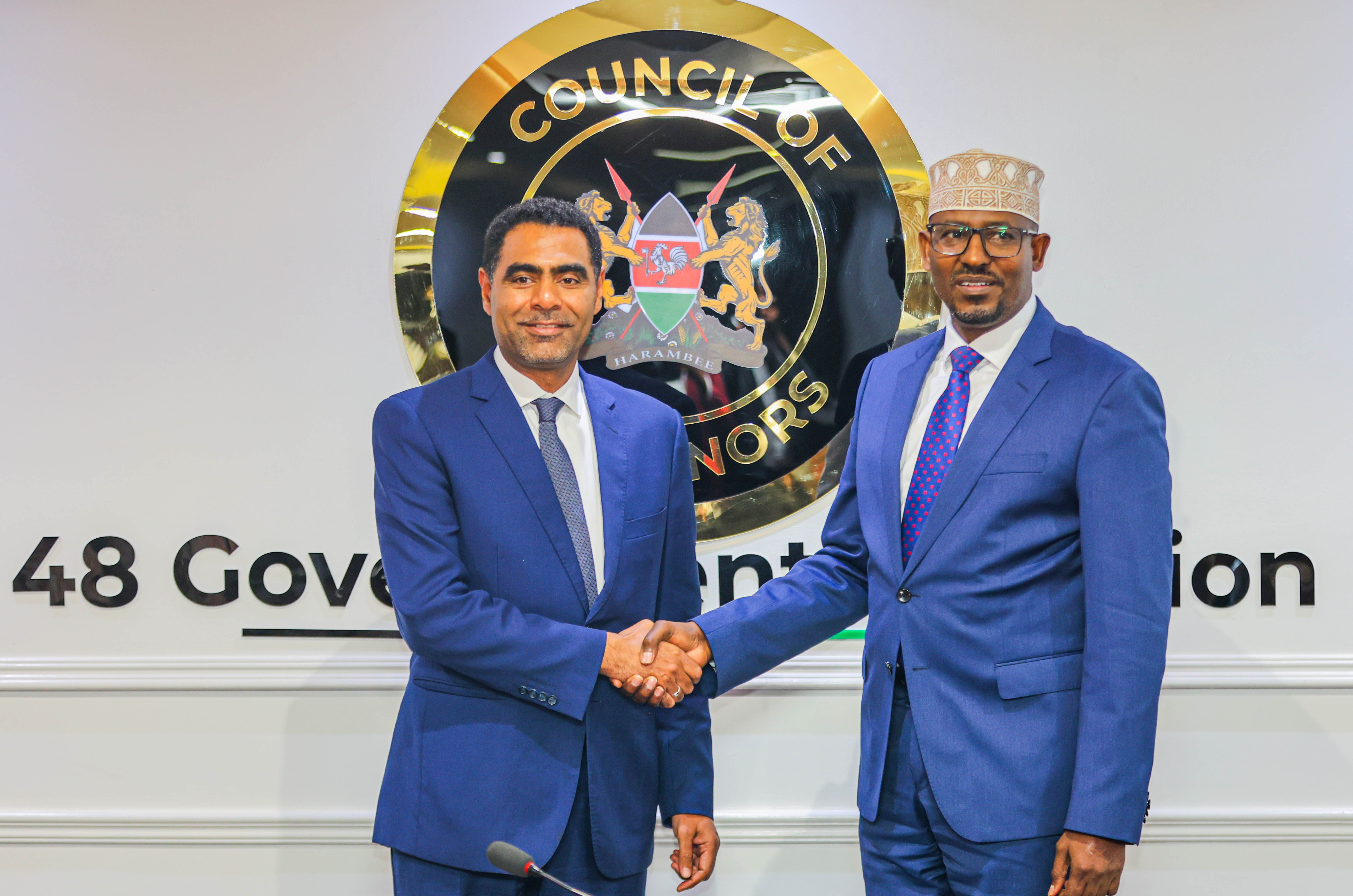
UDA Hails By Election Sweep as Public Verdict on Ruto's Rule "Kenya Has Chosen Programmes Over Tribes"

By George Mutua

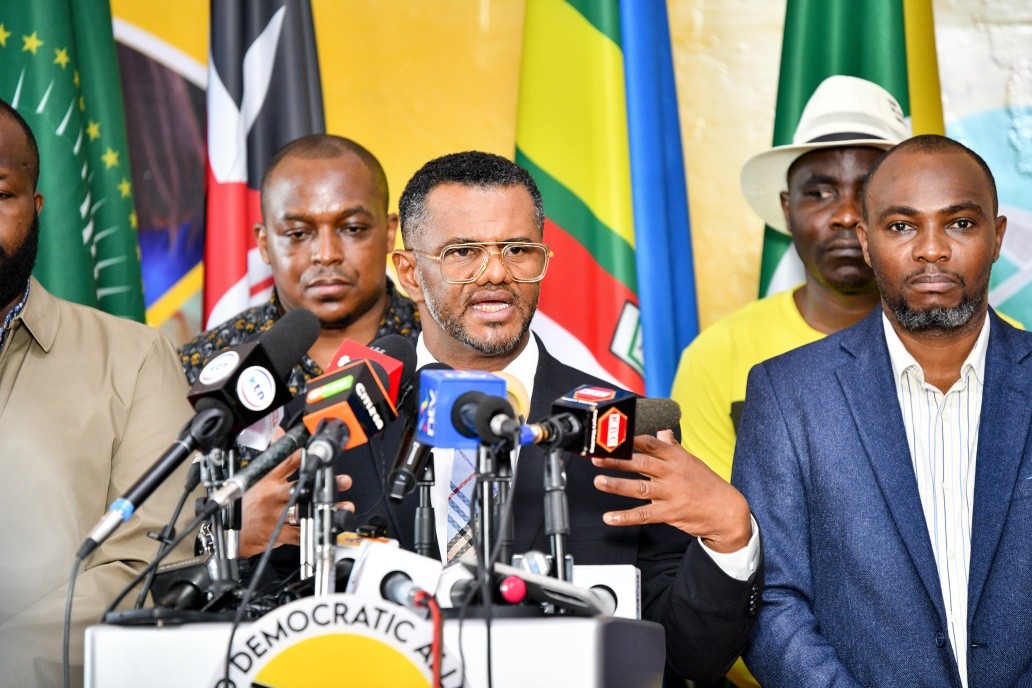
UDA By-Election Sweep
UDA Secretary General Hassan Omar strikes a defiant tone during a media briefing in Nairobi.
"The era of voting along ethnic lines is not yet dead, but the ruling party is betting that delivery, not identity, will define Kenya's political future."

NAIROBI, May 15, 2026

President William Ruto's ruling United Democratic Alliance is no longer reading between the lines. To them, the results of the latest by elections are unambiguous. Kenyans have not only endorsed the Kenya Kwanza administration but have actively rejected the opposition's ethnic playbook.

Fresh from a clean sweep of mini polls held across the country, UDA Secretary General Hassan Omar struck a defiant tone during a media briefing in Nairobi on Wednesday. He argued that the victories, secured in November, February, and now May, represent a continued vote of faith in President Ruto's leadership, despite persistent criticism from opposition quarters.

"We won decisively in the recent by elections across the country," Omar said, naming David Kipsang, Daniel Ndung'u, and B.M. Dirop as the latest UDA flag bearers to triumph in their respective ward contests.

But for Omar, the numbers tell a bigger story than mere seat counts. He believes the outcome signals a fundamental shift in Kenya's political culture, away from the ethnic mobilisation that has long defined the country's electoral battles and toward a new era of issue based competition.

"We will replace ethnic mobilisation with programmes and agenda," Omar declared. "We will go back to the people of Kenya to account for every commitment we made and the extent of delivery that has been undertaken."

The party boss was quick to share the credit, dedicating the wins to UDA's coalition partners within the Kenya Kwanza alliance. According to him, coordinated campaign strategies and seamless teamwork at the grassroots were the real secret weapons behind the repeated electoral success.

At the same time, Omar did not hold back in his assessment of the opposition. Without naming specific leaders, he accused them of clinging to a divisive, ethnicity first political strategy that he said was increasingly out of touch with the lived realities of ordinary Kenyans.

"The political discourse must change," he insisted, calling for a national shift toward accountability and service delivery.

Beyond the by election bravado, Omar used the platform to double down on the administration's broader legacy. He pointed to President Ruto's domestic agenda, including affordable housing, healthcare reforms, and economic turnaround initiatives, as proof that Kenya Kwanza is delivering. But he also highlighted Ruto's growing stature on the continental stage.

"William Ruto has succeeded both on the national and international fronts," Omar said, praising the President's role in convening African leaders to discuss economic self determination. He specifically lauded Ruto's push to mobilise African capital through institutions like the AfDB, Afreximbank, and the TDB as a transformative break from dependence on Western lenders.

He further welcomed continent wide industrial efforts, such as the expansion of the Dangote Refinery, arguing that Africa must stop exporting crude only to import expensive refined fuel. "Expanding refining capacity within Africa is an important step toward economic liberation," he said.

Back at home, Omar expressed quiet confidence about the political horizon. With the 2027 General Election now firmly in view, he said UDA remains focused on service delivery and economic recovery, and that young Kenyans, increasingly participating in by elections, are embracing the government's vision.

"We are humbled by the strong gesture of support from the people," Omar concluded, reaffirming that the ruling party would stay organised, disciplined, and programme driven ahead of the next national contest.

As the opposition regroups, UDA's message from this round of by elections is clear. The era of voting along ethnic lines is not yet dead, but the ruling party is betting that delivery, not identity, will define Kenya's political future.

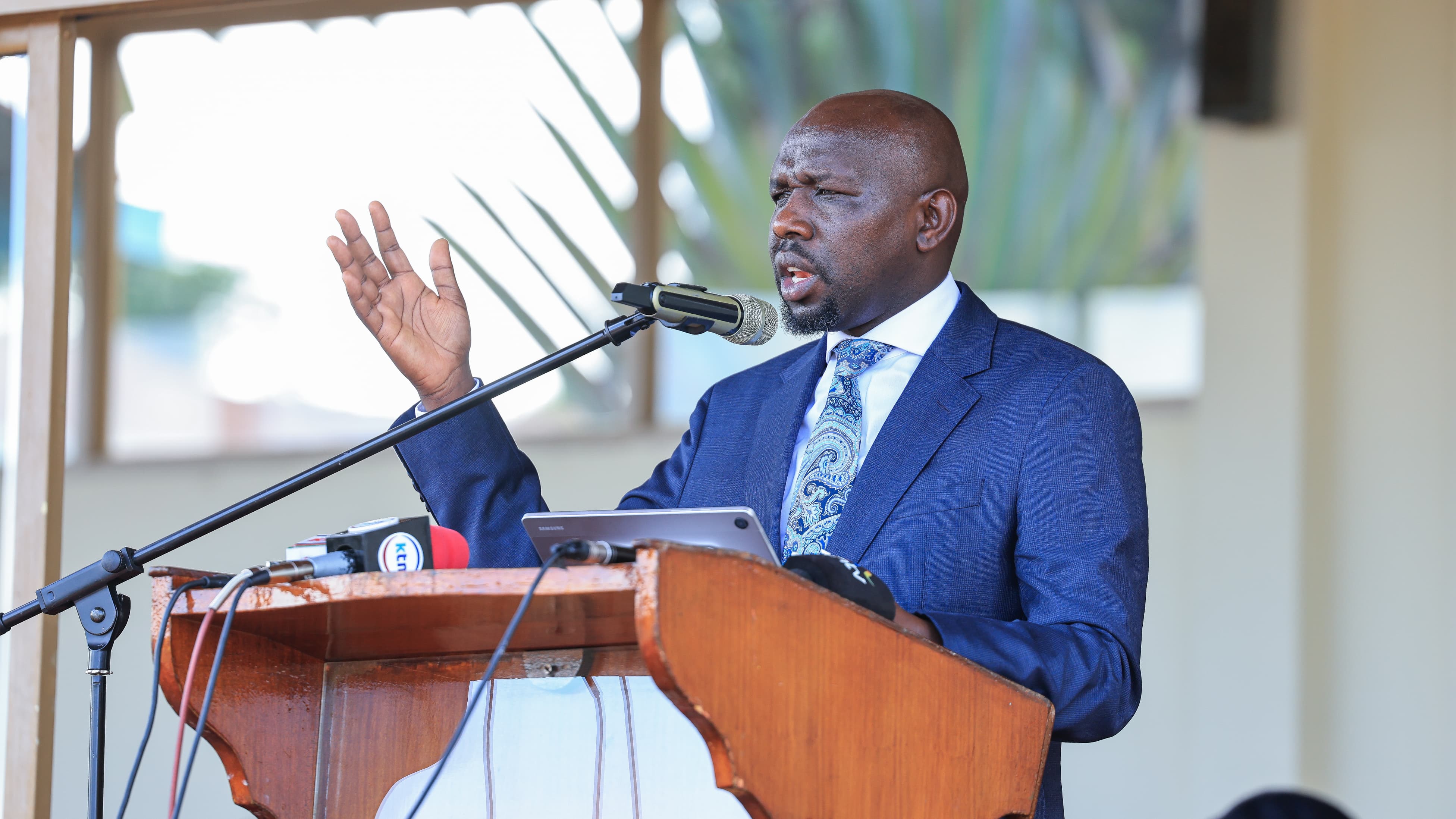
Murkomen Pushes for Tougher Police Recruitment Measures to Enhance Integrity

By George Mutua

CS Kipchumba Murkomen at Kiganjo Police Training College
Interior CS Kipchumba Murkomen announces stricter recruitment standards during an assessment visit to the National Police Training College in Kiganjo.
“Recruitment processes must change, especially on psychometric assessment and drug testing. We will be tougher,” said Murkomen.

Nyeri, Kenya, May 7, 2026

NYERI, Kenya Interior and National Administration Cabinet Secretary Kipchumba Murkomen has announced tougher measures in the next police recruitment exercise aimed at enhancing discipline and integrity within the National Police Service.

Murkomen lauded the dismissal of 54 recruits from the National Police Service training programme at National Police Training College Kiganjo over disciplinary and integrity concerns, saying the move demonstrated the Service’s commitment to professionalism.

He said future recruitment exercises would include stricter psychometric assessments, enhanced scrutiny of criminal records, and mandatory drug testing to ensure only qualified and disciplined candidates join the Service. The Cabinet Secretary spoke during an assessment visit of the Recruits’ Basic Training Course at the National Police Training College Main Campus in Kiganjo.

Murkomen noted that the new recruits are expected to strengthen the country’s security operations, particularly in tackling criminal gangs and politically sponsored violence. “The same politicians who were accusing the government over goons are today complaining because we deployed a few police officers to crack down on them. These recruits will be instrumental in the fight,” he said.

He also commended the standards maintained at police training institutions in the country and proposed the establishment of a National Police Service University to position Kenya as a regional hub for police training. According to the CS, such an institution would attract trainees from neighbouring countries and beyond, owing to the growing demand for Kenya’s security training facilities.

“There is a huge appetite from our neighbours for our training facilities. We have a great opportunity if we establish a properly structured Police University in Kenya,” he said.

Murkomen was accompanied by Inspector General of Police Douglas Kanja, Deputy Inspector General of the Kenya Police Service Eliud Lagat, Central Regional Commissioner Joshua Nkanatha, and other senior government officials.

Macmillan Medical Training College Unveils Scholarships and Women in Tech Initiatives to Combat Healthcare Shortage

By George Mutua

Macmillan Medical Training College launch event
Macmillan Medical Training College Director Mr. Josphat Moses calls for equitable student funding during the launch of major educational initiatives.
"A student studying in an accredited private college is still a Kenyan child deserving support, opportunity, and dignity," said Director Josphat Moses.

NAIROBI, Kenya, May 8, 2026

NAIROBI, Kenya Macmillan Medical Training College has unveiled two major initiatives aimed at expanding access to education and tackling Kenya's healthcare worker shortage. Its Director, Mr. Josphat Moses, urged the government to end what he termed "discrimination" against students in private institutions.

The Afya Bora Scholarship Program, launched Thursday at the college's View Park Towers campus, will provide full and partial sponsorships for students pursuing accredited medical and healthcare training. In a parallel initiative, the Women in Tech Empowerment Program, a fully sponsored partnership with NIA Innovation and Technology Training College, will target women aged 18 to 40 seeking to enter the technology sector.

"Today's event is not simply about a college launch or an institutional program," said Director Josphat Moses in a press statement. "It is about the future of Kenya. It is about the young person who has completed Form Four but cannot afford college fees."

The initiatives align with the Kenya Kwanza administration's Bottom Up Economic Transformation Agenda and operate within TVET standards under TVETA and CDACC accreditation, the college said. In a sharp rebuke to current policy, Mr. Moses called on the government to expand Higher Education Loans Board (HELB) funding to students in accredited private colleges.

"This discrimination must stop," the director stated. "Support must be based on need and potential, not simply whether one studies in a public or private institution." The college noted that while private institutions help train healthcare workers urgently needed for Universal Health Coverage, thousands of their students face "major barriers" to accessing educational financing.

The Women in Tech program seeks to address gender underrepresentation in Kenya's digital economy, offering training in programming, innovation, digital entrepreneurship, and emerging technologies. Mr. Moses emphasized that the initiatives support several United Nations Sustainable Development Goals, including Quality Education, Gender Equality, and Good Health and Well Being. "Institutions like ours must become bridges between talent and opportunity," he concluded.

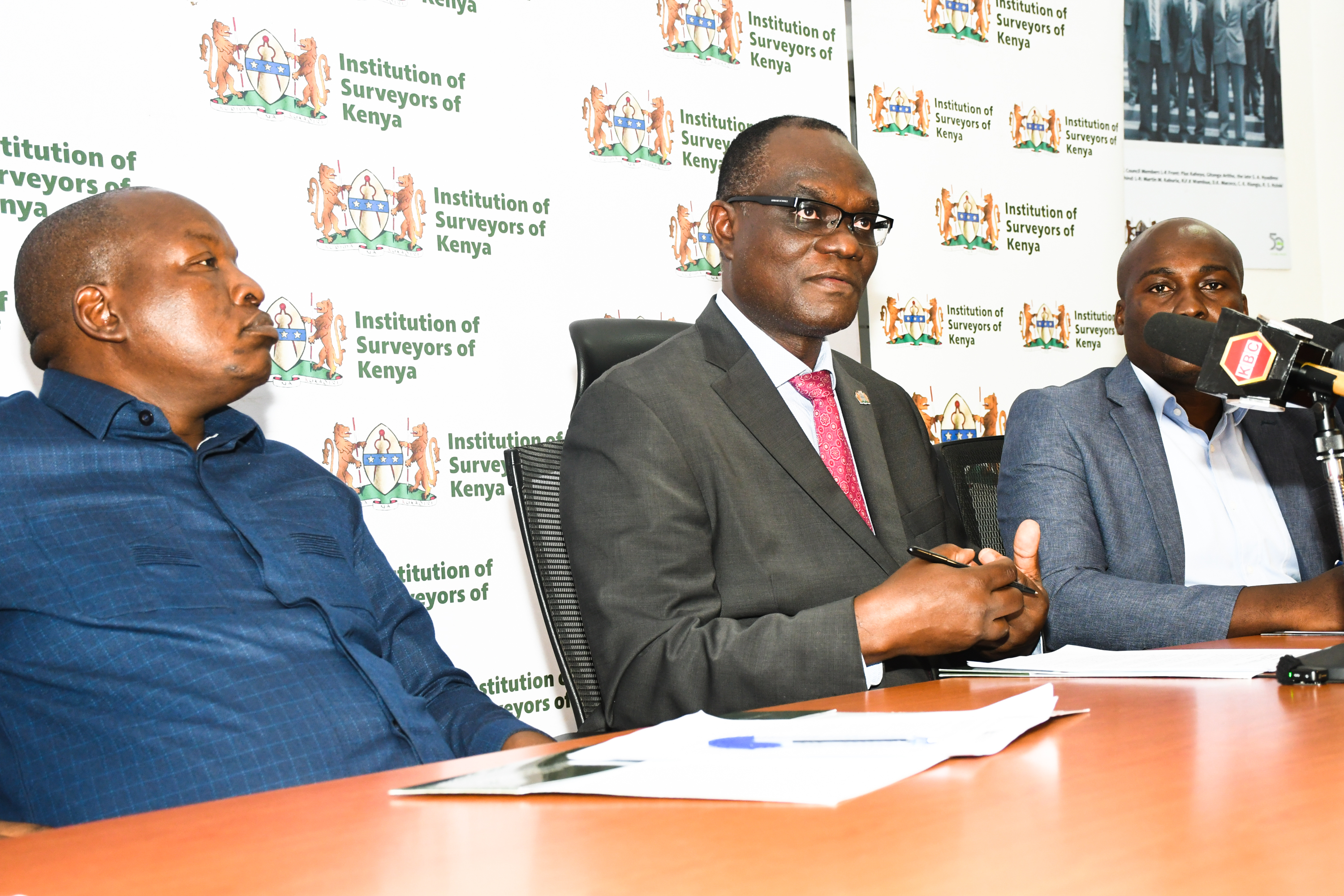
Surveyors Issue Firm Warning: Stop Demolitions on Registered Land, State Must Pay Compensation

By George Mutua

ISK President Eric Nyadimo speaking about Nairobi rivers demolition disputes
ISK President Eric Nyadimo warns that registered land cannot be demolished without due process or compensation.
"A reserve is about use and access, not ownership," Nyadimo said, urging the State to respect title deeds and avoid retroactive riparian redefinitions.

NAIROBI, Kenya, May 5, 2026

NAIROBI, Kenya, May 5, 2026 The Institution of Surveyors of Kenya (ISK) has warned that ongoing demolitions along the Nairobi Rivers Corridor risk violating constitutional land rights and amount to compulsory acquisition if the State does not pay just compensation first.

In a forceful position paper released today, ISK President Eric Nyadimo said the government has wrongly assumed that riparian reserves are automatically public land. He stressed that riparian reserves define use and access, not ownership, and that valid registered titles held before independence cannot be extinguished retroactively.

The surveyors noted that official survey plans have long defined parcel boundaries using river centre lines, and that landowners who acquired titles lawfully and built in good faith deserve protection. "The sanctity of title deeds and their boundaries must be respected," Nyadimo said, adding that any State action resulting in land loss must be treated as compulsory acquisition under Article 40 of the Constitution.

ISK demanded that before any further demolition occurs, the government must commission professional valuations by registered valuers, issue statutory notices, gazette the intended acquisition, and pay prompt, just, and full compensation. The Institution further insisted that any land not classified as a riparian reserve at the time of acquisition cannot be deprived later through retroactive redefinition.

While drawing a line between legitimate title holders and illegal occupants, ISK also pointed to technical inconsistencies in the enforcement process. The organisation criticised conflicting setbacks ranging from six to thirty metres and confusion over whether to measure from the high water mark, riverbank, or centre line. It accused non-surveying agencies such as NEMA and WRMA of conducting measurements without the legally required tools or professional oversight.

"Only the Director of Surveys or a licensed surveyor should handle riparian mapping," ISK said, urging the government to harmonise definitions and procedures under the Survey Act, EMCA, Water Act, Land Act, and the Physical and Land Use Planning Act.

The surveyors also offered a technical roadmap for reducing floods without mass evictions. They highlighted poor drainage, burst private dams, overdevelopment that ignores zoning, and blocked waterways as the real causes of Nairobi's flooding, not simply buildings on reserves. ISK called for unclogging drains, enforcing natural space ratios, mandating topographical surveys before construction, and using historic satellite data to plan storm drainage systems.

ISK said all new roads should have functional drainage connected to natural waterways, and that developers should not build from beacon to beacon without leaving room for water absorption. The Institution concluded that sustainable environmental management must not come at the expense of constitutional guarantees, professional integrity, or public confidence in land administration.

African Political Party Regulators Launch Continental Body to Boost Democracy

By George Mutua

African Association of Political Party Regulatory Authorities launch
Regulators from Kenya, Sierra Leone, and Malawi sign a Memorandum of Understanding at the AAPPRA launch in Nairobi.
"An idea whose time has come cannot be stopped," said Ann Njeri Nderitu, calling for African-led solutions to democratic challenges.

Nairobi, Kenya April 29, 2026

Nairobi, Kenya April 29, 2026 (KNA) — In a landmark move to strengthen democracy and foster inclusive governance across Africa, political party regulators have launched the African Association of Political Party Regulatory Authorities (AAPPRA).

The launch, marked by the signing of a Memorandum of Understanding (MoU), brought together regulators from Kenya, Sierra Leone, and Malawi, with critical support from international partners including the European Union.

Speaking during the AAPPRA conference in Nairobi, Ann Njeri Nderitu, Commissioner at the Independent Electoral and Boundaries Commission (IEBC) and former Registrar of Political Parties, hailed the initiative as both timely and necessary.

"An idea whose time has come cannot be stopped," Nderitu said, noting that the association was born from a pressing need for homegrown, African-led solutions to the continent's democratic challenges.

She explained that AAPPRA would provide a vital platform for regulators to share experiences, benchmark best practices, and support one another in the complex task of managing political parties.

"We are searching for solutions to African challenges from places we cannot get them, when the answers were already here, hidden in our shared experiences," she stated.

Nderitu emphasized that political party regulation is central to democratic governance, arguing that strong political parties form the bedrock of credible elections and accountable leadership. "A political party is the springboard of a good democracy. Once we strengthen political parties, we strengthen the institutions that emerge from them," she said.

She also highlighted the urgent need to tackle exclusion in political processes, noting that many groups remain underrepresented despite comprising the majority. "Exclusion is not just a policy failure; it is a menace that hollows out our democracy and our institutions," she warned, calling on regulators to ensure youth, women, persons with disabilities, and marginalized groups are brought into political party processes.

Nderitu added that the new association would help harmonize standards across countries while respecting different political systems. "Every country has its unique way of managing politics, but we can only make our democratic space better if we learn from one another," she said, expressing confidence that more nations would join over time. "We started with those who are ready, but many others will come on board as the association grows."

Kenya’s Registrar of Political Parties and Chief Executive Officer, John Cox Lorionokou, said the formation of AAPPRA demonstrates the power of collective action. "There can never be a democracy that develops in isolation; it always has a spillover effect on others," he noted.

Lorionokou revealed that the idea evolved from earlier regulator engagements and was strengthened through consultations and technical assessments across participating countries. "We have had thoughts, we have had writings, and now we have action. We are proud that we are here today," he said.

Emphasizing the centrality of political parties, he remarked, "We cannot expect any country to have a national democracy that is above that which is practised by its political parties." He added that cross-border collaboration enables countries to learn from each other’s strengths and address shared weaknesses. "Where one country is weak, another can provide lessons to improve," he said, likening democratic development to farming: "If you don’t improve your neighbour’s breed, you can never get the quality you want."

Participants acknowledged that regulating political parties remains a complex task requiring constant vigilance. Nderitu noted that regulators must be proactive and responsive to emerging issues to ensure democratic stability. "It is not a simple job. It is a job where you have to be 24/7 alert because many things happen within political parties that must be settled for democracy to continue," she said.

The conference also recognized the role of development partners, particularly the European Union, for supporting the initiative from its earliest stages. Nderitu recalled that the idea gained momentum following engagements in Brussels during the International Day of Democracy, where discussions with stakeholders helped shape the vision. She commended Lorionokou for advancing the initiative after her tenure, describing him as "a leader committed to continuity" who demonstrates "leadership with a bigger vision, one that ensures continuity of ideas."

The establishment of AAPPRA is expected to strengthen political party systems, enhance cooperation among regulators, and promote inclusive governance across Africa.

In her closing remarks, Nderitu urged stakeholders to move beyond vision and focus on execution: "A vision without execution is merely a hallucination. You must dream, but when you wake up, implement."

The launch marks a significant milestone in Africa’s democratic journey, with stakeholders expressing optimism that the new body will contribute to stronger political institutions and improved governance across the continent.

Government Rallies National Support for STRI4Society Week 2026 at High-Level Stakeholders Breakfast

By George Mutua

STRI4Society Week 2026 Stakeholders Breakfast
Government officials and stakeholders gather at the high-level breakfast convened by the State Department for Science, Research and Innovation to mobilize partnerships for STRI4Society Week 2026.
"If Kenya is to leapfrog into a globally competitive economy, we must invest boldly in science, research and innovation and demonstrate real results from these investments," said Prof. Shaukat Abdulrazak, Principal Secretary for SRI.

Nairobi, Kenya | April 2026

Nairobi, Kenya | April 2026 — The Government of Kenya has intensified national momentum toward STRI4Society Week 2026 following a high-level Stakeholders Breakfast convened by the State Department for Science, Research and Innovation (SRI).

The meeting, held in Nairobi, brought together leaders from government, academia, industry, development partners, and the private sector to mobilize partnerships and investment for Kenya's premier platform for science, technology, research, and innovation.

Led by Prof. Shaukat Abdulrazak, Principal Secretary for SRI, the breakfast served as a strategic platform to onboard partners and align stakeholders ahead of the national event. Prof. Shaukat reaffirmed the Government's commitment to strengthening the science and innovation ecosystem as a driver of Kenya's economic transformation.

"If Kenya is to leapfrog into a globally competitive economy, we must invest boldly in science, research and innovation and demonstrate real results from these investments," he stated in his keynote address.

He further emphasized that institutions must demonstrate capacity to absorb and translate increased funding into tangible outcomes, noting that Kenya's growing network of universities and research institutions provides a strong foundation for scaling innovation.

The Stakeholders Breakfast was convened to catalyze collaboration across the innovation value chain, presenting STRI4Society Week as more than an event but a national platform for action. Stakeholders were invited to participate as partners, sponsors, and exhibitors, with discussions highlighting opportunities for visibility, collaboration, and investment.

Dr. David Ngigi, Acting Director General of the National Commission for Science, Technology and Innovation (NACOSTI), noted that NACOSTI is committed to ensuring that research and innovation in Kenya meet the highest standards and effectively contribute to national development priorities.

STRI4Society Week 2026, themed "Igniting Innovation: Bridging Science and Society for Sustainable Development," will bring together over 5,000 participants at the Kenyatta International Convention Centre (KICC), including policymakers, researchers, innovators, entrepreneurs, investors, and international delegates.

The week-long programme will feature high-level policy dialogues, keynote sessions, innovation exhibitions, and platforms for industry-academia-government engagement. It will also prioritize youth inclusion through STEM mentorship, innovation challenges, and entrepreneurship initiatives.

National Research Fund (NRF) CEO Prof. Dickson Andala observed that for Kenya to fully realize the value of research, the link between knowledge generation and national development must be strengthened. He noted that STRI4Society Week provides a unique platform to showcase research outputs and accelerate their uptake into policy, industry, and society.

Kenya National Innovation Agency (KeNIA) CEO Dr. Tonny Omwansa added that STRI4Society Week is a critical platform for translating innovation into enterprise and impact. He stated that KeNIA sees this as an opportunity to connect innovators with industry, investment, and policy support to scale solutions that address Kenya's most pressing challenges.

Prof. Abdulrazak called on stakeholders to take a proactive role in shaping and supporting the platform, emphasizing that collaboration will be central to unlocking the full potential of Kenya's science and innovation ecosystem.

"This is our opportunity to showcase what Kenya can achieve when research, policy, and industry work together," he said. "STRI4Society Week must become a platform for results, partnerships, and national transformation."

The convening comes as countries globally leverage science and innovation to address complex challenges such as climate change, health systems strengthening, food security, and digital transformation. As Kenya advances its development priorities under Vision 2030 and the Bottom-Up Economic Transformation Agenda (BETA), STRI4Society Week is expected to play a pivotal role in strengthening the country's innovation ecosystem and accelerating the translation of research into socio-economic development.

Stakeholders at the breakfast expressed strong interest in supporting the initiative through sponsorship, technical collaboration, and in-kind contributions, recognizing the platform's potential to drive visibility, partnerships, and impact. The Government emphasized that success will depend on collective action and sustained engagement beyond the event itself.

Fuel crisis in Kenya is deliberate failure, opposition movement claims

By George Mutua

People's Renaissance Movement leadership address
The People's Renaissance Movement blames government negligence for the current fuel price crisis.
"A government that allows fuel, an essential commodity, to become unaffordable is a government that has lost its moral authority to lead."

Nairobi, April 22, 2026

NAIROBI. The People's Renaissance Movement has accused the Kenyan government of deliberate failure and betrayal over the ongoing fuel price crisis, which it says has plunged millions of citizens into economic distress. In a strongly worded statement released Wednesday, the political movement condemned rising fuel prices and supply instability, blaming government negligence, policy failure, and weak currency management for driving up the cost of living.

According to the movement, transport costs have risen by 20 to 50 percent, food prices by 10 to 15 percent, and small businesses, which account for over 80 percent of employment, are being pushed to the brink of collapse. The movement noted that taxes make up approximately 40 to 50 percent of the pump price, among the highest burdens in the region, while the lack of a functional strategic fuel reserve and transparency in procurement has enabled cartel influence and artificial shortages.

To deliver relief within weeks, the movement proposed suspending VAT, cutting excise duty by at least half, which they claim could lower pump prices by 20 to 30 shillings per litre, and establishing a 15 to 20 billion shilling public transport subsidy fund to stabilize fares. The group also called for securing a strategic fuel reserve equivalent to 60 to 90 days of national consumption and publishing all fuel import contracts for an independent audit within 30 days.

"A government that allows fuel, an essential commodity, to become unaffordable is a government that has lost its moral authority to lead," the statement read, urging Kenyans to reject economic oppression disguised as policy and vote out the regime in the next election.

HONOURING LEGACY THROUGH UNITY: A CALL FOR A UNITED OPPOSITION IN THE OL KALOU BY ELECTION

By George Mutua

Jubilee Party leadership statement
Jubilee Party calls for opposition unity ahead of the Ol Kalou by-election following the mourning of Hon. David Kiaraho.
"Kenyans are increasingly vocal and resolute in their demand for unity of purpose among leaders who seek to offer an alternative vision for the country." said Hon. Moitalel ole Kenta.

Nairobi, April 22, 2026

Nairobi, Kenya. As the nation emerges from a period of deep mourning following the final rites of the late Hon. David Kiaraho, the former Member of Parliament for Ol Kalou Constituency, the political landscape is shifting toward the future. The Jubilee Party has officially broken its silence on the upcoming by-election, issuing a powerful dual message: a firm commitment to field a candidate, coupled with a passionate plea for opposition unity.

In a statement to the press, Jubilee Party Secretary General Hon. Moitalel ole Kenta declared that while the party will honor the legacy of the late MP, a devoted Jubilee member known for his humility and service, by fielding a candidate under its own banner, it is simultaneously calling on coalition partners to rally behind a single opposition flagbearer.

"This is a defining moment for the opposition," Kenta said. "Across the nation, Kenyans are increasingly vocal and resolute in their demand for unity of purpose among leaders who seek to offer an alternative vision for the country. They are calling for cooperation over competition, solidarity over fragmentation, and strategy over short term political interests."

The Secretary General assured the people of Ol Kalou of free, fair, and transparent nominations, emphasizing that the party remains the natural standard bearer for the seat, given that it was previously held by a Jubilee member. However, in a significant gesture aimed at solidifying the opposition's broader strategy, Kenta urged partners in the United Alternative Government to support a single opposition candidate under the Jubilee Party banner for the by-election.

Kenta reminded the public that Jubilee has already demonstrated its commitment to this unity agenda through action. He cited recent precedents where the party stepped aside to support a unified front, including in Mbeere North Constituency and its ward elections, as well as the recent by-election in Emurua Dikirr Constituency in Narok County.

"As partners in the United Alternative Government, we must remain faithful to this precedent," Kenta stated. "This approach is intentional, principled, and aligned with the expectations of Kenyans who are calling on us to act as one and present a credible alternative."

Despite the conciliatory tone regarding the by-election, the party leadership struck a defiant note regarding the 2027 General Election. In a firm declaration meant to dispel any ambiguity about its long term ambitions, Kenta concluded: "For the avoidance of doubt, let it be known that Jubilee Party will field candidates in all electoral positions all over the country, from the MCAs to the President in the upcoming general elections, 2027."

As Ol Kalou prepares to head to the polls, the opposition now faces a critical test: whether they can translate the spirit of cooperation shown in recent by-elections into a lasting, unified force that honors the legacy of leaders like Hon. Kiaraho.

UDA Set for Massive Repeat Phase II Grassroots Elections Across 18 Counties

By George Mutua

UDA Grassroots Elections preparation
The UDA Party prepares for Repeat Phase II Grassroots Elections involving over 8 million voters.
"The scale of the election underscores the party's ambition to build a comprehensive political structure from the ground up," the briefing from the Office of the Secretary General noted.

Nairobi, April 22, 2026

The United Democratic Alliance (UDA) Party is set to conduct its Repeat Phase II Grassroots Elections tomorrow, Thursday, April 23, 2026, with over 8 million voters expected to participate across 18 counties. In a media briefing released today from the Office of the Secretary General, the party confirmed that the exercise will take place in Kisumu, Siaya, Migori, Kisii, Bungoma, Makueni, Machakos, Kitui, Isiolo, Marsabit, Taita Taveta, Lamu, Tana River, Kilifi, Kwale, Mombasa, and Turkana. Kajiado County will hold its elections on Saturday, April 25, 2026.

According to the party's communication, approximately 8 million voters are expected to cast their ballots in over 9,117 Polling Centres spread across the affected regions. The scale of the election underscores the party's ambition to build a comprehensive political structure from the ground up. More than 450,000 candidates have registered to contest for twenty different positions at the polling centre level, including representatives for women, youth, Special Interest Groups, farmers, religious leaders, professionals, and MSMEs and traders.

The UDA Party has reaffirmed its commitment to a technology driven election. Approximately 9,500 electronic voting tablets have already been deployed, with one tablet at each Polling Centre, to manage the process from opening to close. As with previous grassroots elections, the party will deploy end to end technology to manage the process, and the results will be made available to the public via a portal on the UDA website at www.uda.ke. Voting will commence at 8:00 AM and close at 5:00 PM across all centres.

Upon conclusion of the Repeat Phase II elections, the party expects to have produced 182,240 elected grassroots officials with a direct mandate from the people. These officials will form the backbone of the party's structure at the most local level, a key strategy in the party's "Kazi Ni Kazi" philosophy. The briefing noted that the party has so far successfully conducted grassroots elections in 25 counties, producing 235,923 grassroots officials in the initial phase. The repeat exercise in the listed counties aims to address any logistical or procedural challenges encountered earlier, ensuring every region has a fully constituted leadership.

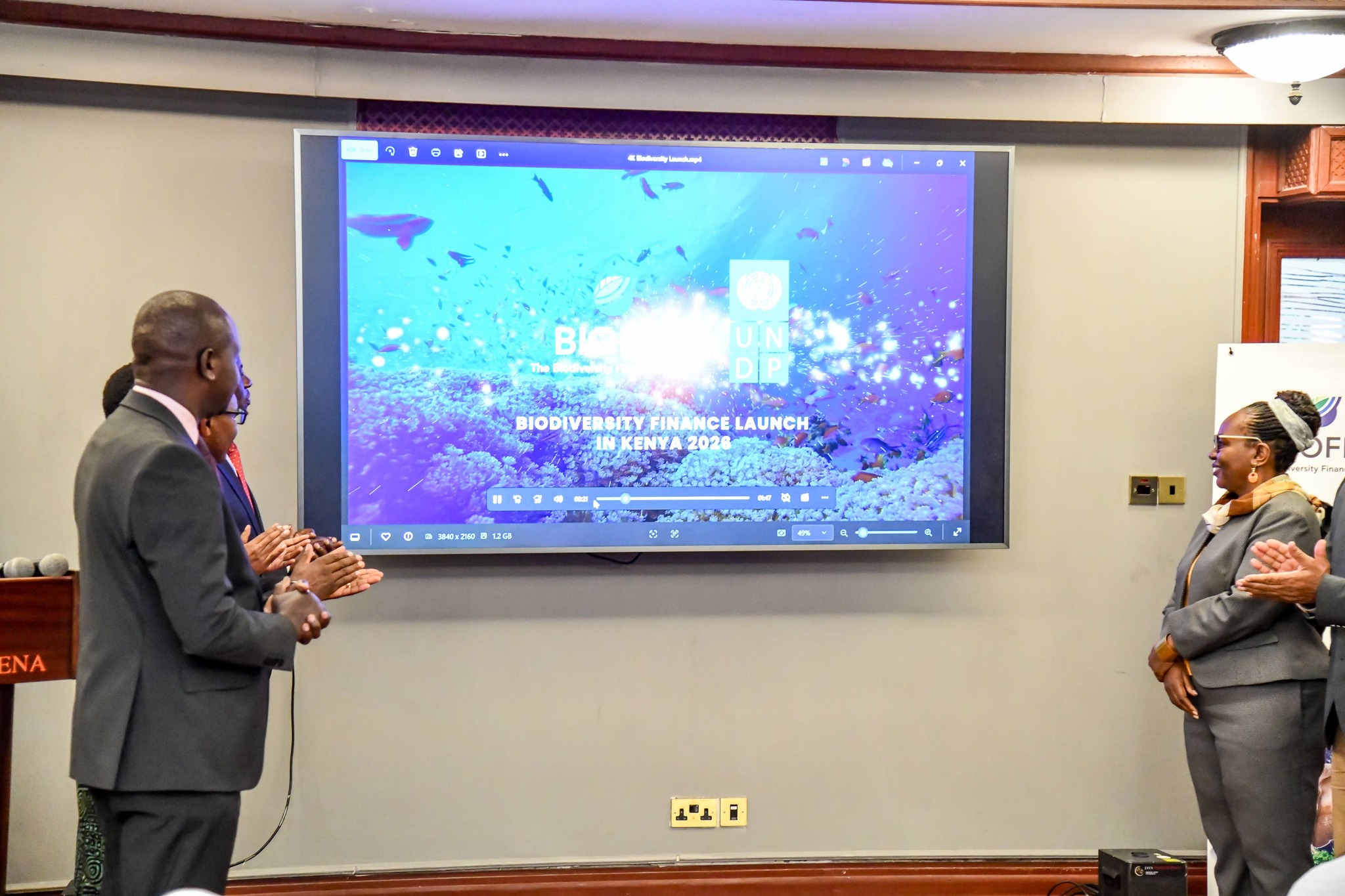
Kenya Launches BIOFIN: Turning Natural Heritage into a Strategic Financial Asset

By Staff Reporter

BIOFIN Launch at Serena Hotel, Nairobi
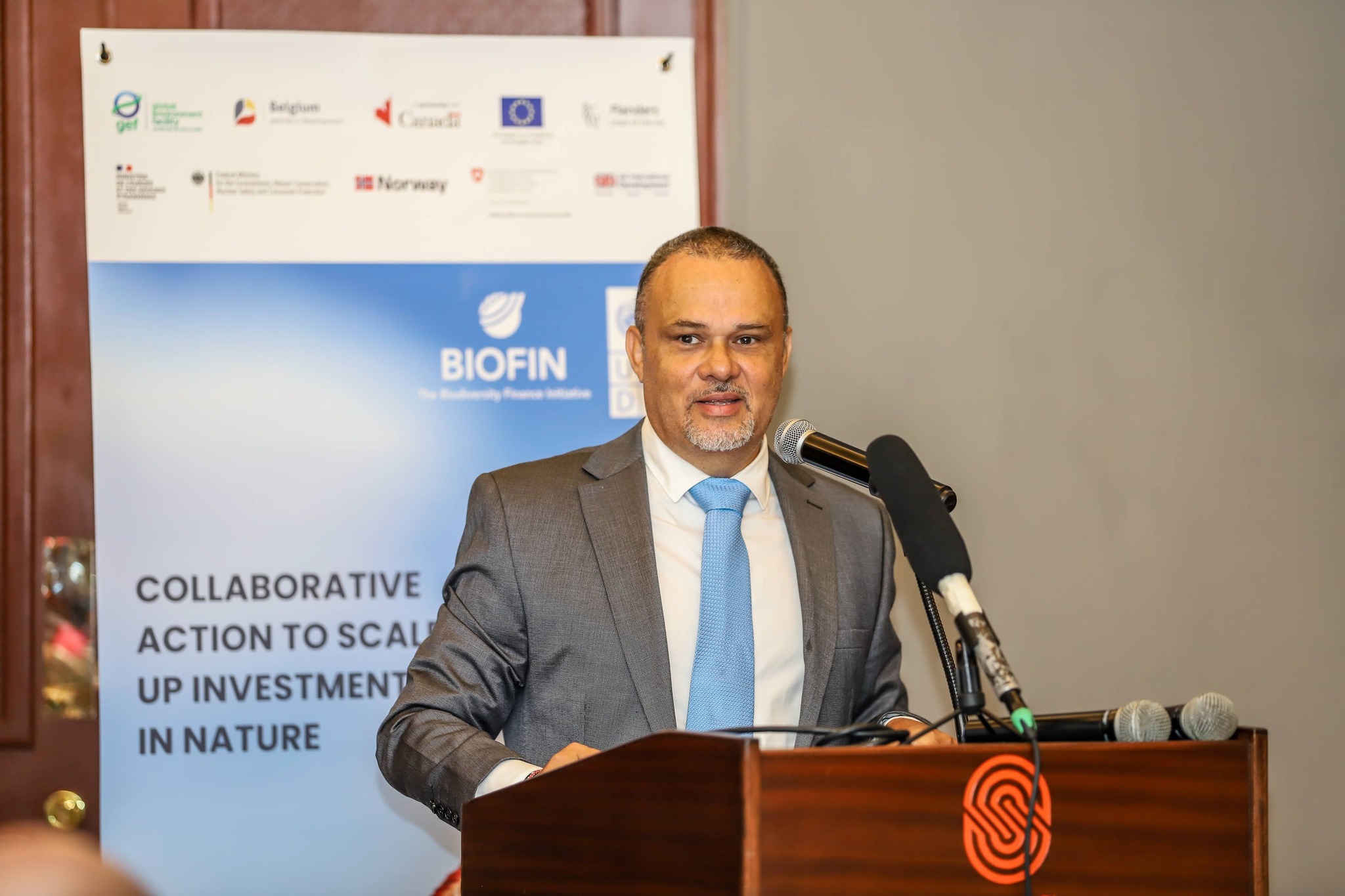
The official launch of the Biodiversity Finance Initiative (BIOFIN) at the Serena Hotel in Nairobi.
"The question today is no longer whether nature matters to Kenya's economy. The real question is how we account for it, finance it, and manage it strategically," said Dr. Jean Luc Stalon.

Nairobi, April 21, 2026

Kenya has launched a powerful new initiative that promises to transform the nation's economy by turning its rich natural heritage into a strategic financial asset. The Biodiversity Finance Initiative (BIOFIN) was officially launched today at the Serena Hotel in Nairobi.

Convened by the United Nations Development Programme (UNDP) and the Government of Kenya, the event united cabinet secretaries, banking executives, conservation leaders, and development partners around a single urgent goal: to mobilise an estimated USD 100 to 150 billion in nature-related financing opportunities over the next decade.

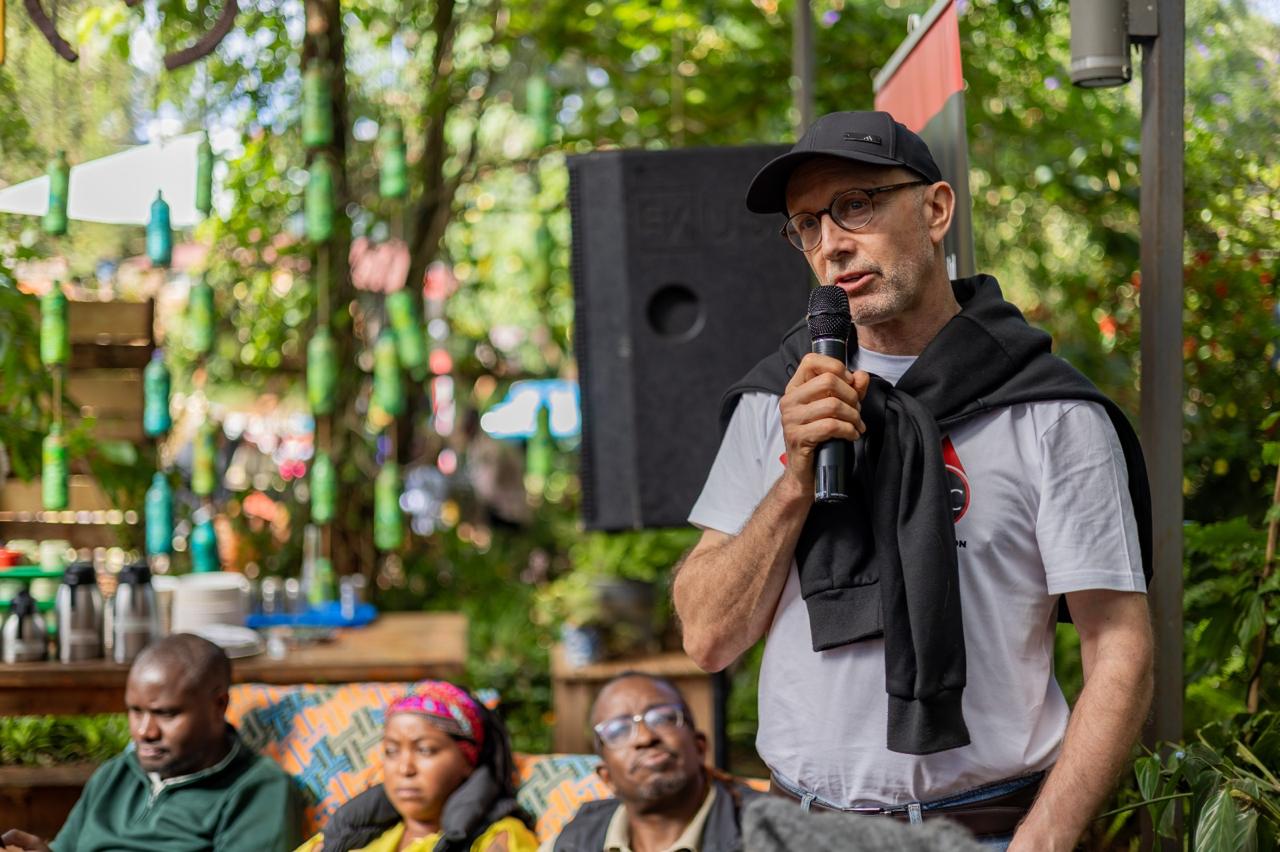
Dr. Jean Luc Stalon, UN Resident Representative for UNDP Kenya
Dr. Jean Luc Stalon, UN Resident Representative for UNDP Kenya, delivering his address during the launch.

This launch comes at a defining moment for Kenya. Nature-dependent sectors contribute nearly half of the country's GDP, and over 91 percent of domestic electricity comes from renewable sources. Yet biodiversity faces accelerating threats from unsustainable land use, climate change, and habitat loss.

"Although nature underpins more than half of global GDP, it remains undervalued in financial and economic decision-making," said Dr. Jean Luc Stalon, UN Resident Representative for UNDP Kenya. "In Kenya, despite strong climate and development ambitions, resources for biodiversity protection remain well below what is required."

Dr. Stalon emphasised that habitat loss, climate impacts, and land degradation are no longer distant environmental concerns. "They are real economic risks affecting productivity, public spending, investment stability, and long term development."

BIOFIN is not another conservation project. It is a practical financial approach that helps Kenya move from commitments to implementation. The initiative answers three critical questions. What does biodiversity protection actually cost? Where is current finance coming from? And how can the financing gap be closed through policy reform, smarter public spending, and increased private investment?

At its heart is a promising shift: viewing biodiversity not as a cost but as a productive asset that supports economic growth, resilience, and competitiveness. Mr. Samson Wangusi, representing Dr. Chris Kiptoo, Principal Secretary of The National Treasury, delivered a powerful call to action. "Biodiversity protection is not a competing claim on scarce public resources. It is an investment in economic resilience, fiscal sustainability, and intergenerational equity," he noted while officially launching BIOFIN Kenya.

Dr. Eng. Festus Ng'eno, Principal Secretary for Environment, Climate Change and Forestry, reinforced Kenya's commitment, noting that achieving national and global biodiversity obligations depends fundamentally on adequate, predictable, and sustainable financing. The launch of the BIOFIN Kenya Country Chapter creates a dedicated national platform for collaboration, uniting the National Treasury, commercial banks, the Nairobi Securities Exchange, and conservation organisations.

UDA Slams Opposition Over Fuel Price Crisis Stance, Defends G-to-G Oil Deal

By George Mutua

Dr. Hassan Omar Hassan, UDA Secretary General
UDA Secretary General Dr. Hassan Omar Hassan speaking in Nairobi on government energy policies.
"The opposition's claims are built on outright lies. Kenya is experiencing the same ripple effects of global energy market disruptions as its peers due to the ongoing war in the Middle East," Dr. Hassan stated.

Nairobi, April 16, 2026

The United Democratic Alliance (UDA) has launched a blistering attack on opposition leaders, accusing them of politicising the ongoing fuel price crisis and describing them as "callous, clueless and deceitful" following a media conference the ruling party says was built on outright lies and calculated misrepresentation of facts. In a statement issued on April 16, 2026, by Secretary General Dr. Hassan Omar Hassan, the UDA maintained that the government has been undertaking concerted efforts to cushion Kenyans from the effects of high fuel prices, which it attributes to global geopolitical disruptions rather than any domestic policy failures.

Dr. Hassan reiterated that the government has released KShs 6.2 billion from the Petroleum Development Levy (PDL) Fund to stabilise pump prices, while the Value Added Tax rate on Super Petrol, Diesel, and Kerosene has been reduced from 16 percent to 8 percent, resulting in new retail prices of KShs 197.60 for Super Petrol, KShs 196.63 for Diesel, and KShs 152.78 for Kerosene.

The statement took particular aim at what it described as the opposition's exploitation of a global challenge for political expediency, arguing that Kenya is experiencing the same ripple effects of global energy market disruptions as its peers due to the ongoing war in the Middle East. Dr. Hassan dismissed opposition claims that the crisis has been manufactured by domestic policy as false, malicious, ill-motivated, and reflecting a profound deficit in global policy comprehension.

He strongly defended the Government-to-Government oil arrangement, noting that it has ensured continued security of petroleum supply while addressing US dollar liquidity challenges and exchange rate volatility that had previously choked the economy. The G-to-G arrangement, he explained, has eliminated spot purchases of the US dollar by about 100 Oil Marketing Companies, which had previously created speculative pressure in the spot market.

In a sharp personal attack on opposition figures, Dr. Hassan singled out the "impeached and disgraced former Deputy President" noting that he had personally received the first G-to-G consignment on April 12, 2023, at the Kipevu Oil Terminal in Mombasa. The UDA Secretary General accused him of now misleading the public with outright defamatory accusations driven by bitterness and selfish political motives.

The statement went on to reject the opposition's call for mass action over fuel price increases, describing such demands as outrageous, naive, and anachronistic. Dr. Hassan further criticised the opposition's proposal to scrap the National Infrastructure Fund and Affordable Housing Levy, arguing that this reflects a policy posture fundamentally at odds with sustained economic transformation. Concluding his statement, Dr. Hassan expressed confidence in the stewardship of Energy Cabinet Secretary Opiyo Wandayi and Trade Cabinet Secretary Lee Kinyanjui, urging them to remain steadfast in the face of sensational assertions by the opposition.

Youth Leaders Rally Behind President Ruto's Fuel Price Cut, Warn MPs and Protest Planners

By George Mutua

Linda Comrades movement representatives
Members of the 'Linda Comrades' movement during their press address in Nairobi.
"Kenyans must understand that global shocks require steady leadership. We thank President Ruto and CS John Mbadi for their timely intervention," Aira stated.

Nairobi, April 16, 2026

A faction of youth leaders identifying themselves as the "Linda Comrades" movement, led by their Chairman Oketch Aira, has thrown its weight behind President William Ruto's recent fuel subsidy while issuing a sharp rebuke to opposition MPs and calling for national calm amid rising geopolitical tensions.

Speaking on behalf of the group, Oketch Aira, who also serves as a Broadband Ambassador-at-Large, thanked the President, the EPRA board, and the National Treasury for cushioning Kenyans from the global fuel crisis. He attributed the recent price hike not to local failures but to the ongoing war in Iran and the subsequent blockade of the Strait of Hormuz. Aira specifically praised His Excellency for lowering VAT on fuel from sixteen percent to eight percent, a gesture he described as timely and responsive to the needs of ordinary citizens.

The address quickly turned combative as Aira accused certain Members of Parliament of causing unnecessary discourse and playing opposition politics without legitimate numbers. He insisted that MPs should remain on the floor of the houses to legislate and table bills that advise the executive, instead of engaging in what he called "sangura behavior" a term implying rowdy or unserious political antics.

Addressing the growing calls for street demonstrations, Oketch Aira urged all youths, including Gen Zs, to keep calm, assuring them that the situation is under control. He revealed that the government still has twelve billion shillings in reserve for subsidies, with 6.2 billion already issued. He cautioned that removing all the remaining funds at once would be reckless, as the country is projecting a crisis in the next three to six months.

Current Stabilized Fuel Prices
Product Stabilized Price (KShs)
Super Petrol197.60
Diesel196.63
Kerosene152.78

Pascal Juma and Ker Abich, both youth leaders, delivered blunt warnings to protest organizers. Pascal Juma challenged anyone calling for mandamano to take their own family members to the streets first as evidence of their commitment. Grace Kimberly condemned MPs for turning the National Assembly into a joke by discussing trivial matters like dressing instead of focusing on the fuel subsidy. Grace concluded by affirming that the Linda Comrades movement will not be swayed by political games.

"Ruto Is the Fuel Cartel" Gachagua and Kalonzo Expose Massive Scam as United Alternative Government Demands Resignations

By George Mutua

Rigathi Gachagua and Kalonzo Musyoka addressing the media
Former Deputy President Rigathi Gachagua and Wiper Patriotic Front leader Kalonzo Musyoka during a media address in Nairobi on April 15, 2026.
"Kenyans have been fed lies ... the real fuel cartel is sitting in State House," Gachagua alleged during the joint press briefing.

Nairobi, April 15, 2026

Former Deputy President Rigathi Gachagua, today leading the United Alternative Government principals, launched a scathing attack on President William Ruto, alleging he is the mastermind behind one of the biggest fuel scandals in Kenya's history. Speaking alongside Wiper Patriotic Front leader Kalonzo Musyoka on Wednesday, Gachagua claimed the real fuel cartel is "not in the boardrooms of oil companies but sitting in State House."

"Kenyans have been fed lies," Gachagua said. "President William Ruto stood before the nation and claimed he had crushed oil cartels, yet he is the head of the cartel himself. The three gallant officers who were arrested on April 2, 2026, have no case to answer because they followed the law strictly. The real culprits are William Ruto, Felix Koskei, Opiyo Wandayi, and Oburu Odinga."

Gachagua linked his allegations to what he described as a long pattern of corruption, referencing the 2009 Brazil maize scandal. "When Ruto was the Minister for Agriculture, he was fired by the late Prime Minister Raila Odinga over that scandal," he said. "You cannot change the character of a man. He has not changed."

According to Gachagua, the alleged scam began after the Middle East crisis disrupted fuel supplies through the Strait of Hormuz. He said that on March 18, 2026, the Vessel Alignment Committee met to address possible shortages and invited thirteen local oil marketing companies to submit emergency bids. He stated that only four firms complied, and that One Petroleum and Oryx, as the lowest compliant bidders, were initially awarded contingency contracts.

Gachagua then alleged that President Ruto intervened to push in a late Gulf Energy bid that had already been rejected on technical grounds. "Gulf Energy is William Ruto's proxy company. It supplies 67 to 80 percent of monthly fuel cargoes. When Gulf Energy's bid was rejected. Ruto issued clear instructions that Gulf Energy's bids be affixed to the procurement process and awarded with immediate effect," he claimed.

Kalonzo Musyoka, addressing the media beside Gachagua, questioned the legal basis for the arrests. "The emergency contingency stocks were duly procured in accordance with the Petroleum Act of 2019, the Petroleum Import Regulations of 2023, the Open Tender Agreement, the Kenya Bureau of Standards waiver, and National Security Council Committee resolutions issued on March 9, 2026," he said. "What crime have the three gallant officers committed?"

The coalition leaders also linked their claims to the fuel price increase that took effect on the night of April 14, 2026. Gachagua said Kenyans are now paying KShs 28.69 more for super petrol and KShs 40.30 more for diesel per litre, describing it as the highest jump since independence and alleging it was engineered for private profit.

Comparing regional prices, Gachagua argued that Uganda pump prices remain lower despite fuel transiting through Mombasa Port. He further said previous administrations cushioned citizens during COVID-19 and the Ukraine-Russia war, while the current government was allegedly passing crisis costs to consumers.

Kalonzo issued a seven-day ultimatum to President Ruto, demanding a special sitting of Parliament and immediate cancellation of the Government-to-Government petroleum framework, which he described as benefiting handpicked companies. He also demanded the resignation and prosecution of Energy Cabinet Secretary Opiyo Wandayi and Trade Cabinet Secretary Lee Kinyanjui over what he termed false testimony before a National Assembly committee on April 13, 2026.

Gachagua additionally called for suspension of the Road Maintenance Levy increase from KShs 18 to KShs 25 per litre, suspension of Affordable Housing levies, suspension of NSSF deductions, and removal of VAT on fuel products. He also proposed suspending the National Infrastructure Fund and using proceeds from equity sales in Safaricom PLC and Kenya Pipeline Corporation to cushion households.

Closing the briefing, Kalonzo said the coalition would sustain pressure until action is taken. "We are the United Alternative Government, led by His Excellency Rigathi Gachagua, and we will not stay silent while Kenyans are being looted. Ruto must go, and his entire energy cartel must face prosecution."

Kenya Announces Major Fuel Price Hike: Petrol Up by KShs 28.69, Diesel Soars by KShs 40.30

By Staff Reporter

Fuel pump at a Kenyan gas station
The Energy & Petroleum Regulatory Authority (EPRA) has announced a significant jump in fuel prices starting April 15, 2026.
"The authority attributed the sharp rise to a dramatic surge in landed costs driven by volatility in international markets."

Nairobi, April 14, 2026

Kenyan motorists and businesses will face significantly higher fuel costs starting tomorrow, after the Energy & Petroleum Regulatory Authority (EPRA) announced sharp increases in maximum retail prices for Super Petrol and Diesel for the period of 15th April to 14th May 2026.

In the latest monthly review, EPRA confirmed that the price of Super Petrol will rise by KShs 28.69 per litre, while Diesel will increase by a staggering KShs 40.30 per litre. The price of Kerosene remains unchanged.

Analysis of EPRA Report (April–May 2026)
Summary of Changes Change (KShs/litre) Nairobi Price (KShs)
Super Petrol +28.69 206.97
Diesel +40.30 206.84
Kerosene Unchanged 152.78

To cushion consumers from the full impact of these global price shocks, the government has taken two key actions: lowering the VAT rate from 16% to 13% and utilizing approximately KShs 6.2 Billion from the Petroleum Development Levy (PDL) Fund to stabilize pump prices.

Selected Town Price Comparison (KShs/litre)
Town Super Petrol (KShs) Diesel (KShs) Kerosene (KShs)
Mombasa203.69203.56149.49
Nairobi206.97206.84152.78
Kisumu206.85207.06153.03
Mandera229.15229.02174.96
Breakdown of Nairobi Retail Price (KShs/litre)
Cost Component Super Petrol (KShs) Diesel (KShs)
Landed Cost107.23133.89
Taxes & Levies82.0974.90
Margins17.3917.31
Final Retail Price206.97206.84

EPRA reiterated that the pricing regulations aim to cap retail prices, allowing importers to recover prudently incurred costs while ensuring reasonable prices for consumers.

International Market Price Trend (Mar-26 vs Feb-26)
Product Feb 2026 (US$/m³) Mar 2026 (US$/m³) % Change
Super Petrol582.11823.87+41.53%
Diesel636.451,073.20+68.72%
Kerosene639.481,311.93+105.15%
USD/KShs Exchange Rate (Mar-26 vs Feb-26)
Month Exchange Rate (USD/KShs)
February 2026129.44
March 2026130.08

KEMI Convenes Global Leaders to Re-invent Education Leadership for a Sustainable Future

By George Mutua

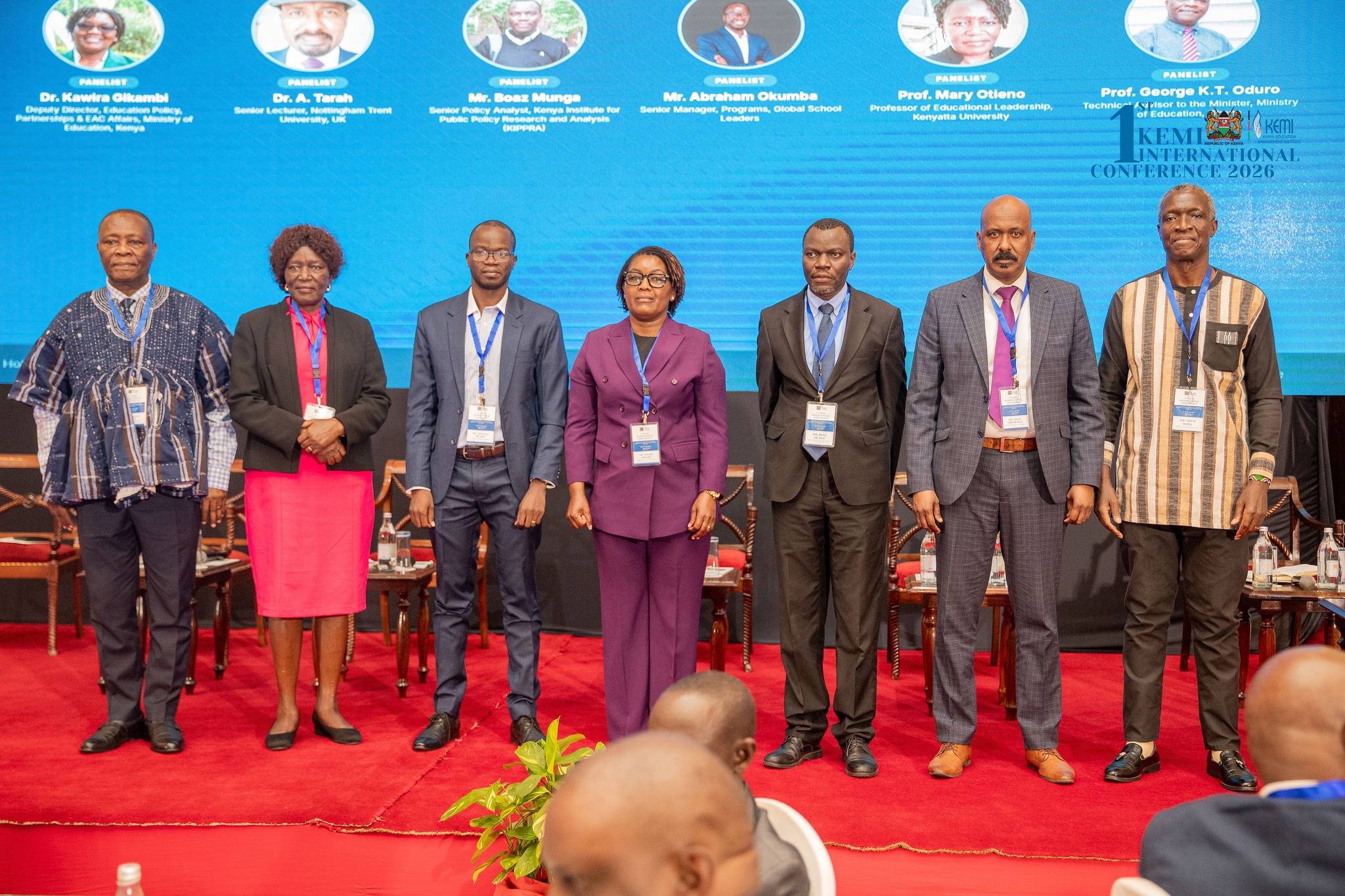
KEMI Leadership Conference in Nairobi
Delegates representing over fifteen countries convene at the KEMI headquarters for the global education leadership summit.
“Leadership is no longer administrative; it is transformational, adaptive, and future-oriented,” remarked KEMI CEO, Dr. Maurice Odondo.

NAIROBI, Kenya — The Kenya Education Management Institute (KEMI) has launched a high-level global conference, bringing together participants from different sectors including government ministries, EdTech firms, and international development agencies to strategize on the future of education leadership.

Convened under the theme, "Catalysts for Transformation: Re-inventing Leadership in a Sustainable and Inclusive Education Ecosystem," the conference delegates representing over fifteen countries are addressing critical gaps in governance, digital transformation, and climate literacy within the education sector.

Dr. Maurice Odondo, KEMI CEO, emphasized that the theme is both timely and urgent. He noted that the institute is committed to its mandate as a national capacity-building body, focusing on transformational leadership to navigate rapid technological change and climate uncertainty.

The Director General at the State Department for Basic Education, Dr. Elyas Abdi Jillaow, added that the era of passive school administration is over. He stressed the importance of bridging the gap between research and policy to ensure that governance mechanisms promote equity and climate-responsive learning for every child.

The official programme is guided by three dedicated sub-thematic tracks: Education Leadership and Governance, Innovation and Technology in Education, and Climate Change and Education. These tracks address everything from AI applications in the classroom to the strategic role of education systems in responding to the global climate crisis.

Throughout the day, parallel sessions facilitated substantive exchanges among diverse stakeholders, enabling cross-sectoral dialogue and multi-stakeholder collaboration aimed at delivering quality, equitable, and accountable education.

Kenya Targets 125% Pork Sector Growth as Government and Industry Unlock Value Chain Potential

By George Mutua

Launch of Pork Pawa Campaign
Hon. Jonathan Mueke, CBS, Principal Secretary, State Department for Livestock Development (centre), joined by Felisters Gitau Mutugu, CEO, Farmer’s Choice Limited (right), and Kanana Ndegwa, Head of Marketing, mark the launch of Pork Pawa Campaign at the National Pig Value Chain Stakeholder Sensitization Forum.
“Transforming the pig value chain requires deliberate and sustained collaboration across production, processing, markets, and policy,” said Felisters Gitau Mutugu, CEO, Farmer’s Choice Limited.

NAIROBI, 14 April, 2026 The Government of Kenya and private sector leaders have today committed to a major push to transform the country’s pig value chain, aiming to close a widening gap between soaring pork demand and limited local production while lifting 1.5 million households.

At a high-level stakeholders’ sensitization forum convened at the Safari Park Hotel in Nairobi, the State Department for Livestock Development and Farmer’s Choice Limited unveiled a coordinated roadmap to address chronic constraints from disease outbreaks and costly animal feeds to broken cold-chain infrastructure, that have kept Kenya’s per capita pork consumption at just 0.4 kg per person annually, half the World Health Organization’s recommended 0.8 kg.

Despite the low consumption, the sector already contributes KES 19.5 billion, representing 5% of national livestock output, and with demand projected to surge by over 125 percent by 2030 driven by rapid urbanization, population growth, and shifting diets—stakeholders described the moment as a critical inflection point.

Speaking as chief guest, Hon. Jonathan Mueke, CBS, Principal Secretary for Livestock Development, said the government is prioritising the sector as part of broader efforts to strengthen food security and agricultural productivity. “The pig value chain presents a significant opportunity for Kenya to diversify its sources of animal protein while improving incomes for smallholder farmers,” he said.

Latest industry figures shared at the forum show Kenya’s pig population at approximately 981,182, with annual pork demand in 2025 standing at 38,500 metric tonnes while production lagged at only 23,000 metric tonnes, with a supply gap that has kept retail prices high and left potential earnings unrealised.

The forum forms part of ongoing efforts under the National Pig Value Chain Development Strategy (2025–2029), which prioritises public-private collaboration to professionalise the sector through farmer training programmes, public education campaigns on pork nutrition and safety, initiatives to expand market access, and investment in cold-chain infrastructure to reduce post-harvest losses.

Beyond economics, speakers underscored pork’s nutritional density and noted that compared to ruminant livestock, pigs have shorter production cycles and lower emissions, aligning with climate-smart agriculture goals. PS Mueke reaffirmed that developing the pig value chain is integral to the government’s Bottom-Up Economic Transformation Agenda, with a specific focus on empowering women and youth.

“Sustainability must be our guiding principle, economically, socially and environmentally,” Mueke said. “We will strengthen inspection and certification systems, promote traceability, and ensure compliance with national and international standards to open local and export markets.”

UASU UoN Chapter Sounds Alarm Over Prolonged Leadership Vacuum and Financial Crisis

By Staff Reporter

UASU UoN Chapter leadership addressing the press
UASU University of Nairobi Chapter leadership sounding the alarm over the institution's stability.
“The absence of permanent leadership has weakened governance and disrupted strategic direction,” warned UASU Chapter Secretary George Osanjo.

NAIROBI, April 13, 2026 — The Universities’ Academic Staff Union (UASU), University of Nairobi Chapter, has sounded the alarm over a prolonged leadership vacuum and a worsening financial crisis at the University of Nairobi, warning that the institution’s stability and reputation are at risk.

The university has been operating without a substantive Vice-Chancellor since September 2024, with all top positions currently held in acting capacities. This leadership vacuum coincides with a severe financial crisis, as institutional debt has surpassed KSh 15.9 billion—the highest among public universities in Kenya, according to the Controller of Budget. In response, UASU is demanding an immediate government rescue package and the fast-tracking of recruitment for permanent leadership to restore institutional stability.

Addressing the press on Monday at the university grounds, UASU Chapter Secretary George Osanjo, alongside Chairman Dr. Ben Nyamchoga and Treasurer Wainaina Githii, said prolonged acting appointments have created uncertainty and hindered effective decision-making.

The union also questioned the lack of urgent government intervention, noting the recent KSh 6 billion bailout extended to Moi University. The union challenged authorities to explain why the University of Nairobi, facing deeper financial difficulties, has not received similar support.

Dr. Nyamchoga expressed deep frustration, pointing to deteriorating infrastructure such as unreliable water supply and poorly furnished offices as indicators of the university’s decline. He called on the University Council to assert its authority and ensure substantive appointments are made.

While stopping short of announcing industrial action, UASU warned that it may consider withdrawing labour if urgent measures are not taken to safeguard the future of Kenya’s oldest institution of higher learning.

Chalan Foundation Bridges the Gap from School to Career Across 10 Counties

By George Mutua

Rox Otieno, Head of Programs at Chalan Foundation
Rox Otieno, head of programs at Chalan Foundation, discussing the foundation's school to career model.
"We have six pillars that we currently are running in those 10 counties," Rox Otieno explained, noting that each pillar comes with a dedicated curriculum and measurable targets.

NAIROBI, Kenya 13 April, 2026 In a coordinated effort to transform youth development from primary school through post-secondary education, the Chalan Foundation is rolling out a six-pillar strategy across 10 counties, reaching 100 schools that have already been assessed through a baseline survey conducted with support from the Ministry of Education. According to Rox Otieno, head of programs at Chalan Foundation, the organization runs most of its initiatives inside schools, including scholarship access, life skills and leadership programs, and a STEAM curriculum, while also deploying community-based interventions to reach learners outside the classroom.

The foundation's baseline survey identified 10 schools per county, creating a clear data-driven starting point for tracking student progress. Beyond primary and secondary education, Chalan Foundation has launched NextGen360, a program designed specifically for post-secondary learners to help them navigate the transition to higher education or the workforce. Early data from the foundation's internal tracking shows student cohorts advancing from a baseline index of 100 to targets ranging between 116 and 127, suggesting significant competency gains across different counties.

With the Ministry of Education as a key partner and 100 schools already active, Rox Otieno and his team are now focused on scaling the STEAM and leadership curricula while expanding NextGen360 mentorship pathways. The foundation expects to release its first full impact report in the coming months, with the goal of proving that an integrated, school to career model can work across diverse Kenyan counties.

Nairobi Entrepreneurs Gain Practical Digital Skills as Inaugural Digital Wealth Lab Concludes

By George Mutua

Charles Msilanga, Founder and Executive Director of Hatima Africa
Charles Msilanga, Founder and Executive Director of Hatima Africa (centre), facilitating the inaugural Digital Wealth Lab workshop.
"That is why you must embrace AI in your daily projects and gigs, not as a gimmick, but as a tool to cut through the confusion and make your brand stand out." Charles Msilanga

NAIROBI, Kenya 11 April, 2026 The inaugural Digital Wealth Lab program, facilitated by Hatima Africa, concluded yesterday to widespread acclaim, drawing entrepreneurs, freelancers, and career professionals eager to master practical tools in digital business and personal development. The workshop aimed to bridge the knowledge gap for youths transforming their career paths, offering them a structured pathway from traditional employment mindsets into sustainable digital and entrepreneurial livelihoods.

A defining moment of the workshop came during the session led by Charles Msilanga, Founder and Executive Director of Hatima Africa, who served as the keynote facilitator. Speaking to a rapt participants, Msilanga issued a powerful challenge to participants to harness artificial intelligence boldly, but with clarity and intentionality. "We are living in a world flooded with ambiguous information," Msilanga told the crowd. "That noise can paralyze you or mislead you if you are not careful. That is why you must embrace AI in your daily projects and gigs, not as a gimmick, but as a tool to cut through the confusion and make your brand stand out." He urged entrepreneurs to move beyond basic AI usage and instead integrate it strategically into content creation, customer engagement, data analysis, and workflow automation. But technology alone, he warned, is not enough. "Your environment will shape your outcome. Get good mentors. Find worthy company. The people you surround yourself with will either amplify your vision or quietly erode it. Choose wisely." His remarks drew sustained applause and sparked animated small-group discussions throughout the remainder of the event.

Throughout the day, the workshop covered a comprehensive range of topics designed to equip participants for the modern digital economy. Sessions explored the era of AI and what it means for work, business, and value creation in the coming decade. Facilitators guided attendees through the critical importance of mental framework and mindset, emphasizing that technical skills alone are insufficient without the right psychological foundation to navigate uncertainty, rejection, and rapid change. Deep dives into the digital economy helped participants understand current trends, emerging opportunities, and where their skills could fit into evolving market demands. Most importantly, the workshop provided hands-on demonstrations of AI tools and practical strategies on how to utilize them, from content generation and customer service automation to data analysis and workflow optimization.

The Digital Wealth Lab is the latest initiative under Hatima Africa's broader mandate: to educate, build capacity, empower communities, and advance sustainable development. Founded and led by Charles Msilanga, the organization has steadily built a reputation for moving beyond conventional seminars to deliver practical, outcomes-driven training that equips individuals with skills they can immediately apply in their livelihoods. Yesterday's workshop embodied that philosophy. Rather than passive lectures, participants left with actual digital assets, sales funnel drafts, content calendars, and financial tracking templates, that they built with their own hands under facilitator guidance.

Participant reactions underscored the workshop's impact. Clyde Ogalo, an attendee, described Msilanga's message on mentorship as timely. "He said 'worthy company.' That hit differently. I've been working alone for two years, and honestly, I've stalled. Today reminded me that I need people who challenge me, not just people who cheerlead," Ogalo said.

Looking ahead, Hatima Africa has made a firm commitment to scale its efforts and support more young people in achieving their goals. Program organizers announced that the Digital Wealth Lab is not a one-off event but the beginning of a sustained movement to reach youths across Kenya, including those in underserved communities who lack access to digital skills training. "This is just the start," Msilanga affirmed. "We are committed to walking with young people as they build their futures. No one should be left behind in this digital shift."

Digital Inclusion: Huawei Donates Smart ICT Equipment to Mukuru Affordable Housing Project

By George Mutua

Freshina Morogo, ICT solution Manager at Huawei Technologies(Kenya) Company Limited
Freshina Morogo, ICT Solutions Manager Huawei Kenya Company Limited
“At Huawei, we believe connectivity is the foundation of opportunity,” said Freshina Morogo, ICT Solutions Manager Huawei Kenya Company Limited.

NAIROBI, Kenya 10 April, 2026 Huawei has reinforced its commitment to advancing digital inclusion in Kenya through a donation of broadband equipment to an ICT Hub classroom at the New Mukuru Primary School, located within the Mukuru Affordable Housing Project.

The technology firm has developed a low-cost, quick-to-install, and easy-to-maintain internet infrastructure solution known as DQ-ODN. Enabled by Safaricom, the system offers entry-level unlimited home fiber access from just 800 KES per month between 50 and 70 percent cheaper than regular packages.

The donated equipment includes a fiber-to-the-office solution, five Wi-Fi 7 access points capable of supporting a large number of high-speed devices, two CCTV security cameras, and a smart screen (IdeaHub). Together, these tools will enhance connectivity, safety, and digital learning for one of Nairobi’s fastest-growing urban communities.

“At Huawei, we believe connectivity is the foundation of opportunity,” said Freshina Morogo, ICT Solutions Manager Huawei Kenya Company Limited. “By supporting the Mukuru community with digital infrastructure and tools, we are not only connecting homes but enabling access to education, livelihoods, and a better quality of life.”

As Kenya accelerates the delivery of affordable housing, the focus is increasingly shifting beyond physical structures to access to opportunity. Reliable internet connectivity is now fundamental for education, employment, digital finance, and government services. Huawei’s intervention aligns with its global digital inclusion vision under the Huawei Tech4All initiative.

The Mukuru Affordable Housing Project reflects a broader shift toward integrating digital infrastructure into urban development from the outset. Kenya’s recent building code reforms requiring fiber-ready infrastructure underscore the importance of embedding connectivity during construction.

“The donated equipment will deliver immediate and tangible benefits to over 500 learners and residents,” Morogo added. “Reliable Wi-Fi will enable access to online learning and digital work, while the IdeaHub smart screen will enable interactive, digital-first learning experiences within the ICT hub.”

Huawei Mukuru Housing Project Initiative

The Affordable Housing Programme is designed to deliver dignity, inclusion, and opportunity. Integrating digital infrastructure ensures residents are not left behind. This initiative contributes directly to the UN Sustainable Development Goals, helping to bridge the digital divide and unlock pathways to inclusive growth.

As African cities continue to expand, integrating digital infrastructure into housing developments will be critical. Huawei has reaffirmed its commitment to working alongside government, developers, and communities to scale similar initiatives across the continent.

The Family Group Foundation Partners with the Military Wives Association of Kenya to Institutionalise Technical and Vocational Training

Military Wives Association of Kenya and The Family Group Foundation sign partnership agreement
Military Wives Association of Kenya (MWAK) Chair Grace Kahariri & The Family Group Foundation Chair Francis Muraya, after signing a partnership to support scholarships, vocational training, youth entrepreneurship, and environmental programmes during the graduation of 89 dependents of Kenya Army service men and women from the TVET programme by the Foundation and MWAK.
"This is indeed a truly great creation that has equipped these young men and women with not only technical skills but has also instilled in them confidence," said Chief of Defence Forces General Charles Kahariri.

NAIROBI, Kenya, April 8, 2026 | By George Mutua

The Family Group Foundation has signed a strategic partnership with the Military Wives Association of Kenya to formally institutionalise technical and vocational skills training within the Kenya Defence Forces, marking a significant step toward scaling youth empowerment and economic inclusion among military families.

The programme has so far benefitted 290 dependents, aged 18 to 25 years, of service personnel in the Kenya Defence Forces, with the goal of enhancing their employability and entrepreneurial opportunities.

Speaking during the fourth cohort graduation of 89 dependents of Kenya Army servicemen and women, held at Embakasi Garrison, Chief of Defence Forces General Charles Kahariri commended the programme's impact in equipping young people with marketable skills. "I would like to appreciate the strong partnership of the Military Wives Association of Kenya and The Family Group Foundation. This is indeed a truly great creation that has equipped these young men and women with not only technical skills but has also instilled in them confidence," he said.

The partnership has now successfully graduated four cohorts, bringing the total number of beneficiaries to 290. The first cohort saw 51 graduates from Kenya Army dependents, the second cohort saw 50 graduates from Kenya Air Force dependents, while the third cohort included 100 graduates from Kenya Navy dependents.

Family Bank CEO Nancy Njau said the initiative reflects the lender's broader commitment to positive social impact and youth opportunity. "At Family Bank, we believe in promoting positive social impact. This partnership represents our commitment to strengthening communities and creating opportunities for our young people. By formalising our partnership with the Military Wives Association, we look forward to empowering the next generation through education, skills development, and mentorship, ensuring that every young person has the tools to succeed and contribute meaningfully to society," she said.

Since graduation, beneficiaries of the programme have made a notable impact in the job market, transitioning into the Kenya Defence Forces as skilled tradesmen, moving into employment, and establishing their own businesses.

Military Wives Association of Kenya Chairlady Grace Kahariri said the collaboration is helping young people build resilience and practical pathways into the future. "Through our partnership with The Family Group Foundation, these students have been equipped with essential skills to navigate the complexities of modern life and build a more resilient future. This joint effort strengthens our mission to empower and uplift young talent," she said.

Beyond entrepreneurship, the partnership will also look to support high school scholarship programmes, psychosocial support initiatives, and climate action efforts, including environmental conservation and ecosystem restoration, in line with the shared vision of both organisations to drive inclusive socio-economic development.

UDA Issues Certificates to By-Election Candidates, Lauds Digital Nomination Process

UDA officials issue nomination certificates to by-election candidates
UDA SECRETARY GENERAL, Hon. Sen. Hassan Omar, MP EALA, presenting certificates to nominees.
"So far, we have not received any complaint for the dispute of this election. That means the exercise that you did was beyond reproach." Anthony Mwaura said.

NAIROBI, March 31, 2026, By George Mutua

The United Democratic Alliance (UDA) has officially issued nomination certificates to its candidates for the upcoming by-elections, with party leaders praising the recently concluded primaries as a model of transparency, fairness, and technological innovation.

During a ceremony at the party's headquarters, National Election Board official Wycliffe Ndwati said the event marked the successful culmination of a nomination exercise conducted over the weekend. "We are gathered here today for a ceremony to issue certificates to our candidates who won the various party primaries in the just concluded by-election nominations," Ndwati said.

National Election Board Chairman Anthony Mwaura underscored the credibility of the process, revealing that the party had not received any formal disputes regarding the outcome. "So far, we have not received any complaint for the dispute of this election. That means the exercise that you did was beyond reproach," he stated.

Mwaura described the nominations as a milestone for the party, attributing the smooth conduct to the adoption of digital technology in managing the electoral process. He expressed confidence in the candidates' prospects, adding, "As you look at them today, we believe that by May 14th they will be elected as Members of Parliament and Members of County Assembly."

Senior party leaders highlighted the growing strength of UDA, noting its consistent success in previous by-elections where it won all available seats. One leader urged the aspirants to remain united, praising the National Election Board for conducting credible nominations. "We are not in the business of losing elections. We are grateful to all those who participated and accepted the outcome," he said, calling on those who lost to rally behind the winners.

The leader further called for political maturity, advising against airing grievances on social media. "In Kenya, we must create a culture where we concede elections with integrity and honour. Your anger should be expressed through the ballot, not social media," he said.

Another speaker commended the party for embracing electronic voting, calling it a landmark achievement in the country's political landscape. "We are the first political party in this country to vote electronically in nominations. This ensures that our candidates truly reflect the will of the people," he said, noting that the system now uses ID scanning technology to verify voters and reduce errors.

He added that the advancements had strengthened confidence in the party's processes, positioning UDA as a benchmark for other political parties. "We can even have other countries come to benchmark on how to conduct nominations," he remarked.

The official urged successful candidates to remain loyal to the party's manifesto once elected, stressing collective responsibility in governance. "When you belong to a political party and are elected, you are duty-bound to support its policies. If your ideas conflict with the manifesto, go with the manifesto," he said, adding that UDA remains focused on fulfilling its pledges on housing, universal health coverage, and food security ahead of the 2027 General Election.

Candidates were also encouraged to unite their supporters and former rivals to strengthen the party ahead of the by-elections. "In a political contest, you will always have opponents. But once you win, bring them on board. We are now one team," one official said.

Leaders expressed optimism about the future of digital elections, with one official noting, "I am hopeful that in the coming years, Kenyans will be able to vote from their homes, with results announced the same day."

The ceremony concluded with the presentation of certificates to the successful candidates, officially clearing them to fly the party's ticket in the upcoming by-elections. Party officials expressed confidence that the candidates would replicate the party's past electoral successes, citing strong grassroots support and the integrity of the new digital nomination system.

Kenya Launches Digital Platform to Revolutionize Farming, Cut Losses, and Boost Incomes

Dr. Juma Mukhwana, Principal Secretary for the State Department for Industry
“The e-WRS Central Registry is not merely a technology platform; it is a confidence-building intervention designed to catalyse participation across the agricultural value chain,” said Dr. Mukhwana.

Nairobi, Kenya | By George Mutua

In a major step toward modernizing its agricultural sector, Kenya today officially launched the Electronic Warehouse Receipt System Central Registry (eWRS-CR), a landmark digital platform designed to curb post-harvest losses and unlock crucial financing for the nation’s millions of smallholder farmers.

The platform, launched by the Warehouse Receipt System Council (WRSC) in partnership with TradeMark Africa (TMA) and funded by the British High Commission (BHC) in Nairobi, creates a secure, government-owned digital hub that automates and centralizes the management of warehouse receipts.

This system allows farmers to store their produce in certified warehouses and receive an electronic receipt as proof of ownership. The receipt can then be used as collateral to secure loans from financial institutions, allowing farmers to avoid the cycle of distress selling immediately after harvest when prices are typically at their lowest.

Mr. Patrick Mbogo, Chairman of the Warehouse Receipt System Council
“This platform strengthens trust among market participants, enhances commodity security, and unlocks access to financing for farmers and agribusinesses. It lays a firm foundation for structured agricultural trade and positions Kenya as a regional leader in agricultural market innovation,” Mr. Mbogo said.

Dr. Juma Mukhwana hailed the platform as a “confidence-building intervention” that will empower farmers and attract private investment. “By enhancing transparency, strengthening trust, and enabling access to finance, this system empowers farmers, attracts private sector investment, and contributes to Kenya’s broader economic transformation,” he said.

Agriculture is the backbone of the Kenyan economy, with smallholder farmers contributing over 75% of national output. However, the sector has long been stifled by two major challenges: a severe lack of access to credit, with less than 5% of bank lending going to agriculture, and staggering post-harvest losses, which can reach 30-40% for some commodities. The eWRS-CR directly tackles both issues by transforming harvested crops into a viable financial asset.

According to Lucy Komen, Ag. CEO and Registrar of the WRSC, 114 warehouse receipts have been registered for nearly 600,000 kilograms of deposited commodities, demonstrating the system’s readiness and early adoption by the private sector.

“We are encouraged by the private sector’s growing embrace of warehouse operations, which is critical to the success of the system,” said Ms. Komen. “The structured market systems enable farmers to focus on production while ensuring their commodities are safely stored, financed, and traded within a structured and secure marketplace.”

The benefits extend beyond Kenya’s borders. TradeMark Africa’s Kenya Country Director, Lillian Mwai-Ndegwa, framed the initiative as a foundational step for seamless regional trade under the African Continental Free Trade Area (AfCFTA). She explained that by making goods traceable and “trade-ready” at the source, the system prevents delays later in the supply chain.

“Seamless borders do not begin at the crossing point. They begin long before a pickup or a lorry reaches the border. They begin at source,” said Ms. Mwai-Ndegwa. “Systems like the Electronic Warehouse Receipt platform ensure that commodities are traceable, trusted and trade-ready from the moment they enter the value chain.”

The British High Commission’s Deputy High Commissioner and Development Director, Diana Dalton, highlighted the tangible impact on farmers’ daily lives. “Kenya and the UK are injecting innovation into agriculture. Not only does this system put more money into farmers pockets, but it also means produce like maize can be used to take out a short-term loan to pay school fees, without a farmer selling their produce at a cheaper price,” Ms. Dalton said.

The launch of the eWRS-CR signals Kenya’s transition from pilot programs to a national, structured agricultural trading system, marking a significant milestone in the country’s efforts to build a more transparent, efficient, and inclusive agricultural economy.

KPC Foundation and eKitabu Forge a New Blueprint to Rescue Kenya's Isolated Creatives

Rachel Gathoni, Kenya Pipeline Company Managing Trustee and Foundation Manager
"We need to push so that even as Kenyans, we can be the first consumers of our art, our books, so that we can keep this sector alive."

Ngecha, Kiambu, Kenya, March 29, 2026: By George Mutua

In the shadow of a bustling Nairobi that often races past its art, a quiet but determined revolution is taking root. At the Mlango Farm artistic community in Ngecha, a serene landscape of sustainable agriculture and deep creative history, the Kenya Pipeline Company (KPC) Foundation has launched the Sanaa initiative. This is not merely another corporate social responsibility event. Instead, it is a deliberate, structured attempt to diagnose and treat the chronic isolation and market fragmentation that have long plagued Kenya's writers, visual artists, and musicians. For one day, over fifty creatives, ranging from Gen Z digital poets to veteran painters who have been wielding brushes for forty years, sat elbow-to-elbow with corporate leaders. Their mission was brutally simple yet historically elusive: to stop creating alone and start accessing the markets and platforms that have always felt just out of reach.

The diagnosis emerging from these conversations was stark. Rachel Gathoni, the Kenya Pipeline Company Managing Trustee and Foundation Manager, who oversaw the dialogue, described a sector suffering from a profound lack of cohesion. "In the creative space, since you kind of create alone, there is isolation and fragmentation," she explained. "Everyone is doing their thing and trying to access their market their way. Access to markets is a challenge. Platforms are a challenge. The financing for them to access these big platforms is also a challenge." Perhaps the most troubling revelation, she noted, was a deep-seated cultural preference for foreign goods over local genius, a trend that threatens to strangle the industry before it can fully mature. "They say that most people would rather buy an imported toy than buy a local piece of artwork created by a Kenyan, or a foreign painting done by AI rather than something created by local talent," Gathoni said. "That caught my eye. We need to push so that even as Kenyans, we can be the first consumers of our art, our books, so that we can keep this sector alive."

Central to this push is a powerful new partnership between the KPC Foundation and eKitabu, a forward-thinking publisher that operates under the Mvua Press imprint. eKitabu has spent the last two years exclusively championing Kenyan adult literature, building a roster that includes the bestselling author Empress Shiko, Kimani Moniki, the poet Scholastica Marat, and the venerable David Maelou, an 86-year-old literary titan whose career spans decades. Speaking at the event, eKitabu's CEO, Will Clurman, made it clear that his organization is not interested in cosmetic gestures. He wants to rewrite the structural rules of the game. "We don't want to do things that are just cosmetic," Clurman asserted. "We want to do things that try to address the structural challenges that artists face. As a publisher, we work with those challenges every day. We know that the artist has an especially lonely challenge sometimes."

Clurman articulated a philosophy centered on three unshakeable goals: author success, getting quality books to market, and making sales, which he redefines simply as "finding readers and getting the books into their hands." While eKitabu was born as a digital-native company, producing audiobooks and even a popular children's television program on the Akili Network (Digital Storytime), Clurman acknowledged that true accessibility still lies in the printed word. "If we focus on digital only, then we miss most of the readers that are out there," he admitted. "We honour the printed word. A printed book can go into a child's hand, can go into an adult's hand. It's on us to make the books affordable." "The only path worth taking is a path with heart," Clurman said. "Heart takes work. It takes time. It takes commitment. Look at David Maelou, who has worked from his childhood to now at 86 years old. His works show that he is about the work. I wish I had easier answers, but for us, it's mainly about the work."

eKitabu CEO Will Clurman speaking at the event
eKitabu CEO, Will Clurman (pictured).
"The only path worth taking is a path with heart. Heart takes work. It takes time. It takes commitment." Clurman said.

The threat of generative AI, including tools like ChatGPT, loomed over the discussions as a potential disruptor. However, Rachel Gathoni offered a measured yet cautious perspective, arguing that technology cannot replicate the intrinsic human desire for authentic connection. "Technology will not replace what we love from humans, because sometimes you want something because it is a human who has made it," she said. Yet she acknowledged the grave risks: the ease with which artworks can be copied, altered, or generated from scratch, potentially sidelining skilled artists. "It is a big risk because of the way artworks can be copied or altered. It is an area that still needs a lot of reflection, a lot of policies, and awareness for artists regarding their rights and copyright laws."

The Sanaa initiative is translating this dialogue into concrete, actionable strategies. The KPC Foundation has committed to a series of specific interventions designed to pry open new markets for artists. First, in all KPC sponsorships and corporate calls, the organisation will provide dedicated physical areas for artists and writers to showcase and sell their work, effectively turning corporate events into marketplaces. Second, KPC will open its workspaces for "open days," allowing staff to directly interact with artists and creators, fostering a culture of internal consumption. Third, the Foundation will actively become a consumer of local art, integrating Kenyan paintings, books, and performances into its offices, private events, and corporate sponsorships. Gathoni emphasized that art itself is the employer; their role is simply to amplify. "For us, we want to be at that point where we are assisting the creatives to be out there, because in that way, each artist will be able to sell their content, support themselves, and support their family."

This entire movement is being incubated on sacred ground. The Mlango Farm, which hosted the event, is itself a story of reinvention and community. Its owner, Els Wakamade, who moved from the Netherlands to Kenya 18 years ago with her late husband, a commander from the local area, transformed a bush into a thriving educational organic farm that now employs 80 people from the Ngecha community. "The commander, my late husband, he knew this community," Wakamade said. "And this community is a community of artists." That ancestral connection to art, combined with corporate will and publishing expertise, has created a unique laboratory for change. Rachel Gathoni assured the artist that they are going to lead the change, "This is more of the start," she concluded. "Mobilizing people and creating awareness takes time. This is a sector we want to be in for quite some time. We do not yet have an end, because we believe in coming together around problems, falling in love with the problems themselves, so we can find strategies that will make change." For the lonely artist, the isolated writer, and the overlooked painter, that long-term commitment from leaders like Gathoni and Clurman may finally be the platform they have been waiting for.

SECAM President Condemns Xenophobic Violence in South Africa

By George Mutua

Cardinal Fridolin Ambongo condemning xenophobic violence
Cardinal Fridolin Ambongo, President of SECAM, addresses the press on xenophobic attacks in South Africa.
"What is happening in South Africa is not just a series of crimes; it is a betrayal of who we are as a people," the Cardinal said.

ACCRA, May 6, 2026

ACCRA, May 6, 2026 – The President of the Symposium of Episcopal Conferences of Africa and Madagascar (SECAM), Cardinal Fridolin Ambongo, has condemned the recent wave of xenophobic violence targeting fellow African nationals in South Africa, warning in a press address on Wednesday that such acts are "tearing at the moral fabric of the continent."

Speaking to journalists in Accra, Cardinal Ambongo described the attacks as a direct assault on the foundational principles of the African Union and the spirit of Ubuntu, a core African value encapsulated in the phrase "I am because we are." "When a brother turns a weapon against a brother simply because of his nationality, we do not merely break the law—we deny the very image of God within ourselves."

The Cardinal, who also serves as the Archbishop of Kinshasa, urged the South African government to move beyond rhetoric and take immediate, concrete action. "We have heard promises before. Today, we are calling for handcuffs and courts, not just communiqués," he stated firmly. "The government of South Africa has a continental duty to investigate these acts impartially and bring the perpetrators to justice. Impunity is the mother of atrocity." SECAM's statement further emphasized that the violence constitutes a serious violation of the African Charter on Human and Peoples' Rights, undermining the fundamental rights to life, dignity, security, and equality before the law.

Cardinal Ambongo also directed sharp criticism at continental bodies, calling on the African Union to fully assume its role as guardian of Africa's values. "Africa wants to sit at the table of global powers. But how can we demand respect from the world when we slaughter each other within our own house?" he asked. "The credibility of the Africa we want is at stake." He urged the AU to ensure the effective implementation of African legal instruments on human rights and to establish prevention and early warning mechanisms against xenophobic violence.

Addressing the theological and moral dimensions of the crisis, Cardinal Ambongo invoked the biblical story of Cain and Abel, asking, "Am I my brother's keeper?" He answered, "The answer, today, is yes. We are our brother's keepers." Citing the parable of the Good Samaritan from the Gospel of Luke, he called on all people to reject hate rhetoric and divisive discourse. "Following the example of the Good Samaritan, we must see the stranger not as a threat but as a neighbor," he said. "We must rediscover an 'ethic of closeness.'" At the same time, he reaffirmed the need for balance between state sovereignty and the duty of migrants to respect the laws and customs of their host country, as outlined in the Catechism of the Catholic Church.

Cardinal Ambongo concluded his address by offering direct consolation to the victims and their families, pledging the full spiritual, pastoral, and supportive closeness of the Catholic Church in Africa. "To every migrant, every mother who has lost a son, every family living in fear: You are not forgotten. You are not alone," he said. "From Cairo to Cape Town, we are one family. And we will never abandon you." SECAM reaffirmed its resolute commitment to migrants, the poor, and the most vulnerable, vowing to promote a society founded on justice, peace, human dignity, and dialogue between African peoples and nations.

Breaking news coverage Breaking News

Breaking News: Major Event Unfolds

By George Mutua | Jan 1, 2024

A significant event has taken place, impacting communities worldwide. Read more to find out the details and implications of this unfolding story.

Isaac Mwaura

Govt Dismisses Finance Bill Rumors, Warns of Child Abduction Surge

By George Mutua | May 27, 2026

Government Spokesman Isaac Mwaura debunks tax misinformation while revealing that over 10,000 child protection cases were recorded in the last year.

Kenya Gears Up to Make History as Host of UFAK Region East Karate Championships

By George Mutua | May 22, 2026

The Kenya Karate Federation announces final preparations for the landmark UFAK Region East Karate Championships at Nyayo Stadium, expected to draw 14 nations.

Dr. Purity Ngina

Scholar Calls for Age Limit Reform and Competence Based Inclusion

By George Mutua | May 21, 2026

Dr. Purity Ngina, CEO of NGEC, challenges structural biases and age limits in research grants to unlock Africa's potential for the 2050 research target.

NCBA Group Q1 2026 Results

NCBA Group Posts KES 6.0 Billion Profit After Tax in Q1 2026, Signaling Strong Start to New Strategic Era

By Staff Reporter | May 20, 2026

NCBA Group PLC reports KES 6.0 billion profit after tax in Q1 2026, a 9.0% increase, driven by a new four-pillar growth strategy and strong operating income.

UDA Condemns Killing

UDA Condemns Horrific Killing of Woman Over Ruto Tattoo

By George Mutua | May 17, 2026

The United Democratic Alliance demands justice for Rachael Muthoni, doused with petrol and set ablaze in Mwiki over political differences.

Hon. Dennis Kagasi

Dennis Kagasi Addresses Fuel Price Crisis in Nkaimurunya

By Staff Reporter | May 18, 2026

Hon. Dennis Kagasi acknowledges the pain of rising fuel costs and outlines government strategies for transparency and structural reform.

UDA By-Election Sweep

UDA Hails By Election Sweep as Public Verdict on Ruto's Rule

By George Mutua | May 15, 2026

Kenyans have not only endorsed the Kenya Kwanza administration but have actively rejected the opposition's ethnic playbook, says UDA Secretary General Hassan Omar.

CS Kipchumba Murkomen Kiganjo visit

Murkomen Pushes for Tougher Police Recruitment Measures

By Celestine Lomolijah | May 7, 2026

Interior CS Kipchumba Murkomen announces stricter psychometric tests and drug screening for future police recruitment to ensure integrity.

Macmillan Medical Training College initiatives

Macmillan College Unveils Scholarships & Women in Tech Program

By George Mutua | May 8, 2026

Macmillan Medical Training College launches Afya Bora scholarships and a Women in Tech program while calling for an end to HELB funding discrimination.

ISK President Eric Nyadimo speaking on Nairobi rivers demolition dispute

Surveyors Issue Firm Warning: Stop Demolitions on Registered Land

By Staff Reporter | May 5, 2026

The Institution of Surveyors of Kenya demands the State pay compensation and respect title deeds before any further demolition along Nairobi Rivers.

STRI4Society Week 2026

Government Rallies National Support for STRI4Society Week 2026

By Staff Reporter | April 2026

The Government of Kenya convenes high-level Stakeholders Breakfast to mobilize partnerships and investment for Kenya's premier platform for science, technology, research, and innovation.

EPRA Energy Conference

EPRA Calls for Harmonised Regional Action for Energy Security

By Staff Reporter | April 21, 2026

EPRA issues a call for research-driven, harmonised action across African nations to bolster energy security and investment.

BIOFIN Launch

Kenya Launches BIOFIN: Turning Natural Heritage into Asset

By Staff Reporter | April 21, 2026

The Government of Kenya and UNDP launch the BIOFIN initiative to mobilise up to USD 150 billion for nature-related financing.

Dr. Hassan Omar Hassan

UDA Slams Opposition, Defends G-to-G Oil Deal

By George Mutua | April 16, 2026

Secretary General Dr. Hassan Omar Hassan defends fuel subsidies and rebukes opposition claims as malicious.

Oketch Aira

Youth Leaders Rally Behind President Ruto's Fuel Price Cut

By George Mutua | April 16, 2026

The 'Linda Comrades' movement praises the fuel subsidy and warns MPs against inciting youths into street protests.

Rigathi Gachagua and Kalonzo Musyoka at a media briefing

"Ruto Is the Fuel Cartel" - Gachagua and Kalonzo Expose Massive Scam

By Staff Reporter | April 15, 2026

Gachagua and Kalonzo alleged State House-linked interference in emergency fuel procurement and issued a seven-day ultimatum demanding resignations and prosecutions.

Fuel Price Hike

Kenya Announces Major Fuel Price Hike: Petrol Up by KShs 28.69

By Staff Reporter | April 14, 2026

EPRA confirmed sharp increases in fuel prices starting April 15, driven by surging international landed costs.

KEMI Conference

KEMI Convenes Global Leaders to Re-invent Education Leadership

By George Mutua | April 14, 2026

KEMI hosts a high-level summit in Nairobi focusing on transformational leadership, digital integration, and climate-responsive learning systems.

Pork Sector Growth

Kenya Targets 125% Pork Sector Growth as Government and Industry Unlock Value Chain Potential

By Staff Reporter | April 14, 2026

Government and Farmer’s Choice Limited launch a coordinated roadmap to transform Kenya's pig value chain and meet rising protein demand.

UASU UoN Crisis

UASU UoN Chapter Sounds Alarm Over Prolonged Leadership Vacuum and Financial Crisis

By Staff Reporter | April 13, 2026

UASU warns of potential financial collapse and governance failure at the University of Nairobi, citing a KSh 15.9 billion debt and leadership vacuum.

KPC Volleyball Victory

KPC Sends Early Warning Shot with Commanding Opening Victory

By Staff Reporter | April 13, 2026

Kenya Pipeline Company Volleyball Club delivered a clinical straight-sets victory over Ghana’s KSC in their Pool A opener at the 2026 CAVB Championship.

Chalan Foundation Programs

Chalan Foundation Bridges the Gap from School to Career Across 10 Counties

By Staff Reporter | April 13, 2026

The Chalan Foundation is rolling out a six-pillar strategy across 10 counties, reaching 100 schools to transform youth development and career pathways.

Digital Wealth Lab Nairobi

Nairobi Entrepreneurs Gain Practical Digital Skills as Inaugural Digital Wealth Lab Concludes

By George Mutua | April 11, 2026

The Digital Wealth Lab program by Hatima Africa concluded with entrepreneurs mastering AI tools and digital business strategies for sustainable livelihoods.

Huawei ICT equipment donation

Huawei Powers Digital Inclusion at Mukuru Affordable Housing Project

By George Mutua | April 10, 2026

Huawei donates broadband equipment and Wi-Fi 7 access points to New Mukuru Primary School, enhancing digital learning and affordable connectivity.

Cardinal Fridolin Ambongo condemning xenophobic violence

SECAM President Condemns Xenophobic Violence in South Africa

By George Mutua | May 6, 2026

Cardinal Fridolin Ambongo urges South Africa to prosecute xenophobic attackers and restore African unity, calling the violence a betrayal of the continent's moral fabric.

Military Wives Association of Kenya and The Family Group Foundation partnership signing

The Family Group Foundation Partners with the Military Wives Association of Kenya to Institutionalise Technical and Vocational Training

By George Mutua | April 8, 2026

The Family Group Foundation and MWAK have formalised a TVET partnership that has already benefitted 290 KDF dependents through skills training, mentorship, and entrepreneurship support.

Prime Cabinet Secretary Musalia Mudavadi at the Second African Urban Forum

Mudavadi Warns Africa's Urban Future Hangs on Today's Decisions as Second African Urban Forum Opens in Nairobi

By George Mutua | April 8, 2026

Mudavadi told delegates in Nairobi that Africa's urban future will be shaped by today's choices on housing, planning, infrastructure, and coordinated investment.

Second Africa Urban Forum ahead of its opening in Nairobi

Second Africa Urban Forum Kicks Off Tomorrow in Nairobi as Stakeholders Await Concrete Outcomes

By George Mutua | April 7, 2026

African leaders, financiers, and youth representatives gather in Nairobi on April 8 for AUF2 with pressure building for practical urban delivery, not just declarations.

Dr. Juma Mukhwana, Principal Secretary for the State Department for Industry

Kenya Launches Digital Platform to Revolutionize Farming, Cut Losses, and Boost Incomes

By George Mutua | Nairobi, Kenya

Kenya launched the Electronic Warehouse Receipt System Central Registry to reduce post-harvest losses and unlock financing for smallholder farmers.

Former First Lady Her Excellency Margaret Kenyatta

Amref International University Unveils State-of-the-Art Campus at 6th Graduation, Kenyatta Awards Scholarships

By George Mutua | July 11, 2025

AMIU inaugurates Northlands Campus in Ruiru, awards scholarships, and graduates 400+ health professionals in a ceremony presided by H.E. Uhuru Kenyatta.

Bamburi Cement incoming Chief Executive Officer Geoffrey Ndugwa

Bamburi Cement Appoints Geoffrey Ndugwa as New CEO Effective April 1, 2026

By George Mutua | April 2, 2026

Bamburi Cement has appointed Geoffrey Ndugwa as chief executive as the company advances an ambitious capacity expansion and clinker self-sufficiency strategy.

Family Bank Chair Lazarus Muema, CFO Paul Ngaragari and CEO Nancy Njau during the release of the 2025 full-year results

Family Bank Group Profit After Tax Surges by 55.4% for Full Year Ended 2025

By George Mutua | March 30, 2026

Family Bank's 2025 results showed stronger deposits, rising shareholder funds, and higher lending to MSMEs, lifting profit after tax to KES 5.4 billion.

Professor Anne Beatrice Kihara

Global Health Leaders Converge in Nairobi as FIGO President Prof. Kihara Anne Beatrice Calls for Urgent Action on Maternal GBS Vaccination

By George Mutua | February 23, 2026

FIGO president Prof. Kihara urges urgent action on maternal Group B Streptococcus vaccination; read the full story in the Health section.

Airtel Africa Group CEO Sunil Taldar and Airtel Kenya MD Ashish Malhotra

Airtel Africa Completes Starlink Mobile Data and Messaging Tests in Kenya

By George Mutua | March 24, 2026

Airtel Africa and SpaceX say the Kenya pilot proved standard smartphones can send messages, use maps, and access light data services in areas with no terrestrial signal. Read the full business story.

Nairobi city view

'Stories Can't Travel on Talent Alone': Inside the Bold Plan to Remap African Literature from Nairobi

By George Mutua | March 26, 2026

Africa Forward Fest 2026 is coming to Nairobi with cross-border publishing talks, theatre, translation, and reader events designed to help African books travel farther and faster.

Economic growth trends

Economic Growth Trends in 2024

By Jane Smith | Feb 15, 2024

An in-depth analysis of the economic growth trends expected in 2024, including key sectors driving the economy and potential challenges ahead.

Bamburi Cement CEO Geoffrey Ndugwa

Bamburi Cement Appoints Geoffrey Ndugwa as New CEO Effective April 1, 2026

By George Mutua | April 1, 2026

Bamburi Cement appoints Geoffrey Ndugwa as CEO to lead strategic expansion plans including a $250 million clinker factory project in Kwale County.

Health innovation

Health Innovations: What to Expect

By Dr. Alex Brown | Mar 10, 2024

Explore the latest innovations in healthcare technology and how they are set to revolutionize patient care and treatment options in the coming years.

Renewable energy

The Future of Renewable Energy

By Emily Green | Apr 5, 2024

A comprehensive look at advancements in renewable energy technologies and their potential to shape a sustainable future for the planet.

Records Digitization Failures Risk Digital Kenya; Urges ICT-Records Unity

Conference address
"We cannot afford to continue recording false starts every year." Eng. John Tanui (remarks delivered by Ms. Mary Kerema, OGW)

Nairobi, Kenya July 16, 2025

Ms. Mary Kerema, OGW - Secretary, ICT e-Government & Digital Economy (speaking on behalf of Eng. John Tanui, MBS)

Ms. Mary Kerema, OGW, delivering remarks on behalf of Eng. John Tanui, MBS, the Principal Secretary for ICT and the Digital Economy issued a blunt assessment that government efforts to digitize critical records are failing, risking the paralysis of Kenya's broader digital transformation agenda.

Speaking to ICT Directors and stakeholders at a breakfast meeting hosted by the Kenya Association of Records Managers and Archivists (KARMA) at the Serena Hotel, Kerema said progress since the Ministry directed State Corporations to adopt paperless systems in March 2023 has been significantly low.

Kerema highlighted Section 17(3) of the 2016 Access to Information Act, which mandated public entities to computerize records within three years, and outlined key issues: weak policy frameworks, poor implementation, limited ISO best-practice usage, major skills gaps, weak ICT-records collaboration, and weak change management.

Kerema urged ICT Directors to embed records-management principles into digitalization projects, prioritize ICT training, and work closely with records professionals. The Ministry, via the ICT Authority, pledged support for standards and capacity building.

She also highlighted KARMA's annual conference in Mombasa as a key opportunity to bridge the ICT-records management divide.

WADR Kenya Urges Peaceful Conflict Resolution Amidst National Tensions

NAIROBI, Kenya July 16, 2025 | George Mutua

WADR Kenya Chairperson Eunice Lumallas with stakeholders
Women in Alternative Dispute Resolution (WADR Kenya), led by Chairperson
Eunice Lumallas(middle).
Amidst escalating tensions across Kenya's political, social, and economic sectors, Women in Alternative Dispute Resolution (WADR Kenya), led by its Chair Eunice Lumallas, has issued a powerful call for nationwide adoption of peaceful conflict resolution mechanisms.
Lumallas, emphasizing Kenya stands at a "critical juncture", warned that unchecked disputes threaten to erode hard-won gains in governance, entrepreneurship, innovation, and the rule of law, jeopardizing national unity, business confidence, investment, and the hope of Kenyans. Representing diverse stakeholders, WADR Kenya passionately argued that choosing hostility leads to collective loss, while reasoned dialogue allows everyone to rise and gain.

Chair Lumallas urged all Kenyans to prioritize empathy and actively embrace dialogue, mediation, conciliation, and reconciliation core Alternative Dispute Resolution (ADR) methods as the first recourse, preventing disputes from escalating into adversarial or violent conflicts.

Highlighting the critical benefits, Lumallas stressed that ADR is essential for safeguarding Kenya's economic resilience and social fabric. She emphasized that a predictable, peaceful, and rule-based environment is paramount for business operations and investment, noting ADR preserves commercial interests and relationships. Furthermore, utilizing ADR promotes greater access to justice, alleviates pressure on the courts, and cultivates a culture of respect. Crucially, Lumallas stated, avoiding incitement and provocation is vital to protect Kenya's international reputation and attractiveness as a dispute resolution hub. Declaring this appeal a "moral imperative and a national duty," the WADR Chair asserted Kenya must position itself as a beacon of peace and justice in Africa, leading not just economically but in managing dissent.

To achieve this vision, Lumallas called upon the public and businesses to seek professional mediators and arbitrators, noting WADR Kenya's own pool of available experts and actively support community and institutional peacebuilding efforts. She also demanded that leaders at every level be held accountable and engage in constructive dialogue. Concluding, Chair Eunice Lumallas reaffirmed WADR Kenya's commitment and urged a national pledge "to resolve conflict through wisdom, not war; through understanding, not upheaval," underscoring this path as fundamental to Kenya's prosperity and unity amidst current economic pressures and political shifts.

Share

Latest News

  • Govt Calms Anxiety Over Finance Bill, Child SafetyMay 27, 2026
  • Kenya to Host UFAK Region East Karate ChampionshipsMay 22, 2026
  • Kenyan Scholar Calls for Age Limit Reform in ResearchMay 21, 2026
  • NCBA Group Posts KES 6.0 Billion Profit After Tax in Q1 2026, Signaling Strong Start to New Strategic EraMay 20, 2026
  • UDA Condemns Horrific Killing of Woman Over Ruto TattooMay 17, 2026
  • Dennis Kagasi Addresses Fuel Price Crisis in NkaimurunyaMay 18, 2026
  • UDA Hails By-Election Wins, Cites Confidence in RutoMay 15, 2026
  • Murkomen Pushes for Tougher Police Recruitment MeasuresMay 7, 2026
  • Macmillan College Unveils Scholarships and Women in Tech InitiativesMay 8, 2026
  • Surveyors Issue Firm Warning: Stop Demolitions on Registered Land, State Must Pay CompensationMay 5, 2026
  • African Political Party Regulators Launch Continental Body to Boost DemocracyApril 29, 2026
  • Opposition Claims Deliberate Fuel Crisis FailureApril 22, 2026
  • Jubilee Calls for Unity in Ol Kalou By-ElectionApril 22, 2026
  • UDA Repeat Grassroots Elections Set for 18 CountiesApril 22, 2026
  • Kenya Launches BIOFIN InitiativeApril 21, 2026
  • UDA Slams Opposition Over Fuel Price CrisisApril 16, 2026
  • SECAM President Condemns Xenophobic Violence in South AfricaMay 6, 2026
  • Youth Leaders Rally Behind President Ruto's Fuel Price CutApril 16, 2026
  • "Ruto Is the Fuel Cartel" - Kalonzo Expose ScamApril 15, 2026
  • Kenya Announces Major Fuel Price HikeApril 14, 2026
  • KEMI Convenes Global Leaders on EducationApril 14, 2026
  • Kenya Targets 125% Pork Sector GrowthApril 14, 2026
  • KPC Sends Early Warning Shot with VictoryApril 13, 2026
  • Chalan Foundation Bridges the Gap to CareersApril 13, 2026
  • Nairobi Entrepreneurs Gain Practical Digital SkillsApril 11, 2026
  • Huawei Powers Digital Inclusion at MukuruApril 10, 2026

Popular Topics

  • Politics 42
  • Technology 38
  • Entertainment 31
  • Sports 29
  • Health 27
  • Business 24

Upcoming Events

  • International Food Festival - NairobiMay 15, 2026
  • Tech Innovation ConferenceMay 22, 2026
  • Africa Forward Fest 2026May 7, 2026
GlobalNews

Your trusted source for news, analysis, and expert opinion from around the world.

Connect with us

Explore

  • Home
  • News
  • Business
  • Health
  • Sports
  • Opinion

Newsletter

Get a short digest of top stories weekly.

Contact

Email: info@martenetwork.com

Phone: +254 7277 2480

Nairobi, Kenya

© 2026 Global News Network - All rights reserved.